

 Sasha Campbell
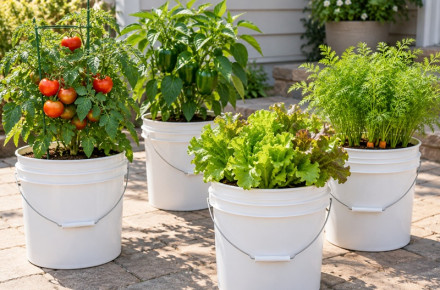
You do not need a big yard to grow vegetables. A sunny porch, patio, or balcony can be enough. With a few 5-gallon buckets, you can grow fresh food close to your door.
A bucket works well for one large plant or several small plants. The trick is to choose crops that fit, give them enough sun, and water them when the soil starts to dry.
Best Vegetables to Grow in a 5-Gallon Bucket
Here are 12 vegetables you can grow in a 5-gallon bucket [1].
1. Tomatoes
Grow one tomato plant in each bucket. A patio, bush, or dwarf variety is a good choice because it stays smaller than many other tomatoes.
You can grow a cherry tomato plant too, but check its label. Some cherry tomato plants grow very tall.
Tomatoes need plenty of sun and steady water. Put a cage or stake in the bucket while the plant is young.
A large tomato plant may grow and produce more fruit in a bigger pot, so pick a compact type for your bucket.
2. Peppers
A 5-gallon bucket can hold one pepper plant. Choose a sweet or hot pepper you like to eat.
Set the bucket in a sunny spot. Check the soil often during hot weather, as bucket soil can dry out quickly.
If the plant grows tall or becomes heavy with peppers, give it a stake or cage for support.
3. Eggplant
Give each eggplant its own bucket. Eggplant likes warm weather and plenty of sun.
Some eggplant plants grow quite large. A compact variety is a good pick if you have little space.
You can add a stake when the plant is young to help support its fruit later [1, 2].
4. Cucumbers
You can grow one cucumber plant in a 5-gallon bucket.
A bush or compact variety is the easiest choice for a small space. If you choose a climbing cucumber, give it a strong trellis.
Cucumbers grow quickly in warm weather. Check the soil often and water when it starts to feel dry.
Look at the plant often when fruit starts to grow, and pick the cucumbers while they are still tender.
5. Bush Beans
Bush beans stay shorter than pole beans. You can grow several in one bucket if you leave enough room between them.
Plant the seeds as the packet directs. Once the young plants come up, remove any that are too close together. This gives the others room to grow. Pick the bean pods when they reach your preferred size [1, 3].
6. Lettuce
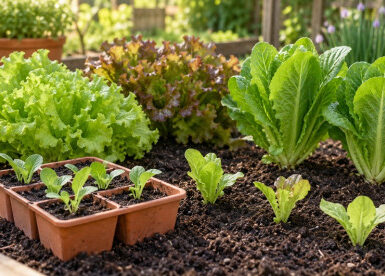
A bucket can hold several leaf lettuce plants. Grow them from seed or start with small plants from a garden shop.
When the leaves are big enough to eat, pick some from the outside of each plant. Leave the small leaves in the middle to keep growing.
Lettuce does best in cooler weather. In hot places, try growing it during a cooler time of year or giving it some afternoon shade [4].
7. Spinach
Spinach is another leafy crop you can grow in a bucket. Plant the seeds at the depth shown on the packet. If too many sprout close together, remove some so the rest have room.
Spinach grows best in cool weather. Keep the soil moist while the seeds sprout. When the leaves are ready, pick some for salads or cooking [3].
8. Swiss Chard
Swiss chard has large leaves and colorful stems. It can brighten your bucket garden while giving you leaves to cook and eat.
Give each plant room to spread. Pick the larger leaves on the outside and leave the smaller ones in the middle to grow.
Check the soil often, especially if the bucket sits in strong sun.
9. Carrots
Carrots can grow in a 5-gallon bucket filled with loose potting mix. Short or round carrot varieties are good choices for container growing.
Plant the seeds about ¼ to ½ inch deep. Keep the soil moist while you wait for them to sprout.
When the young plants come up, remove some so the remaining carrots have room to grow [5].
10. Radishes
Radishes are a good crop to try in your first bucket garden. They grow best in cooler weather and do not need a whole bucket for just one plant.
Plant the seeds ¼ to ½ inch deep. Once they sprout, remove crowded seedlings so each radish has room to form its root.
After you harvest them, you can plant another batch if the weather is still cool enough [6].
11. Beets
You can grow several beets in one bucket if you give them enough space. Plant the seeds as the packet directs, then remove extra seedlings so the roots can grow.
Beet roots are good for roasting or boiling. You can eat the leaves too.
Like carrots and radishes, beets are a good crop to try during the cooler part of your growing season.
12. Cabbage
A 5-gallon bucket can hold one cabbage plant. Give it the whole bucket so its leaves have room to spread.
Cabbage grows best in cooler weather. Keep the soil moist and look under the leaves for pests.
Even one bucket can give you a cabbage to use in slaw, soup, or another meal.
Where to Buy Seeds
You can buy vegetable seeds at garden centers, farm stores, and online seed shops.
Look for words such as “bush,” ‘dwarf,” “patio,” or “compact” when choosing plants for a bucket. Read the seed packet to check how much sun and space each plant needs.
How to Set Up a 5-Gallon Bucket Garden
Choose a food-grade bucket. Do not use a bucket that once held paint or cleaning chemicals. Drill holes in the bottom so extra water can drain away.
Fill the bucket with potting mix, leaving a little space at the top for watering. Do not pack the mix down hard. Soil dug from your yard can become too dense in a bucket, making it hard for water to drain.
Put tomatoes, peppers, eggplant, and cucumbers where they get about six to eight hours of direct sun each day.
Leafy greens can grow with less. Keep the buckets close to a water source if you can. They may need water often in hot, dry weather [4].
To check a bucket, push your finger about an inch into the mix. If it feels dry, water slowly until some water runs out of the bottom. If you use a saucer, empty any water left in it.
Your potting mix may already contain plant food, but it can run out as plants grow. Check the bag before adding more. If your plants need feeding, use a fertilizer made for vegetables and follow its label.
Start with two or three crops you enjoy eating. Once you see how they grow in your space, you can add more buckets.




Add comment