

 Sasha Campbell
Boiled eggs are simple to make, but one question causes a lot of debate: Should you place eggs in cold water or add them to water that is already boiling?
Both ways can work. Starting with boiling water makes the cooking time easier to control. Starting with cold water lets the eggs heat slowly. Your best choice depends on the results you want and the method you find easier.
This guide explains how to boil eggs in hot or cold water. It also gives cooking times for soft-, medium-, and hard-boiled eggs.
Is It Better to Boil Eggs in Hot or Cold Water?
Starting with boiling water often gives results that are easier to repeat. You know the exact moment the eggs begin to cook. This makes it easier to get the yolks the way you like them.
The cold-water method can also produce good eggs. With this method, the eggs and water heat together. However, every stove and pot heats at a different speed. The amount of water also affects the cooking time. As a result, the eggs may turn out a little different each time.
Neither method can promise that an egg will not crack. Eggs may crack if you drop them into the pot or let them bounce in rapidly boiling water. Handle them gently and keep the water at a gentle boil.
How to Boil Eggs Starting With Hot Water
Pour enough water into a pot to cover the eggs by about one inch. Bring it to a gentle boil.
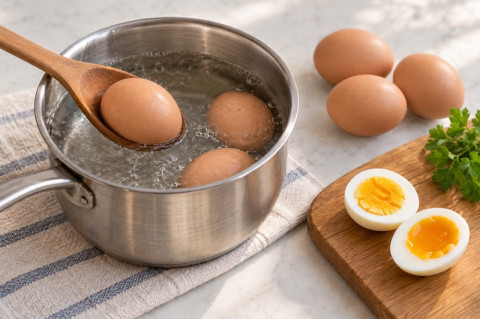
Use a spoon or small strainer to lower each egg into the water. Move slowly so the eggs do not hit the bottom of the pot. Keep the water at a gentle boil instead of letting it bubble wildly.
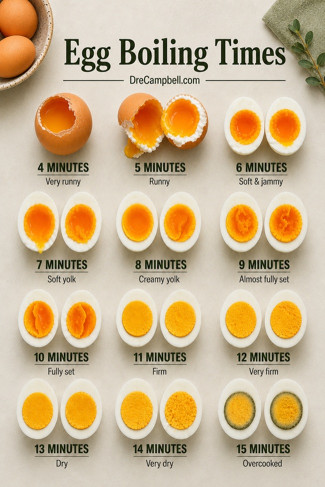
Start the timer as soon as the eggs enter the water. Use these estimated times as a guide for large eggs taken straight from the refrigerator:
- 6 minutes: mostly firm white with a runny yolk
- 7 minutes: firm white with a soft yolk
- 9 minutes: firm white with a creamy, mostly set yolk
- 11 to 12 minutes: firm white and firm yolk
The water may stop boiling briefly when you add cold eggs. Keep the pot over medium heat and allow the water to return to a gentle boil. Lower the heat if the eggs begin to bounce around.
Egg size and starting temperature can change the cooking time. How high you live above sea level can also make a difference. You may need to add or remove a minute after testing your first batch.
How to Boil Eggs Starting With Cold Water
Place the eggs in a single layer in a pot. Add cold water until it sits about one inch above them.
Put the pot over medium-high heat. Bring the water to a full boil. As soon as it boils, remove the pot from the heat and cover it with a lid.
Let large eggs stand in the covered pot for about 12 minutes for firm yolks. Extra-large eggs may need a little more time. Smaller eggs may need less.
Move the cooked eggs into ice water when the time ends. If the yolks are softer or firmer than you want, adjust the time by one minute for your next batch.
Some people leave the pot on the stove and cook the eggs at a gentle simmer. This method is different and requires different timing. Following one method from beginning to end will give you more reliable results.
When Do You Start Timing Boiled Eggs?
The answer depends on your method.
If you start with hot water, begin timing as soon as you place the eggs in the boiling water.
If you start with cold water, wait until the water reaches a full boil. Then remove the covered pot from the heat and begin timing.
Always use a kitchen timer. Even one or two extra minutes can change a creamy yolk into a firm one.
Which Method Makes Eggs Easier to Peel?
Eggs started in hot water may be easier to peel. However, results can vary. The age of the eggs and the way you cool them can also affect peeling.
Very fresh eggs are often harder to peel. Eggs that are 7 to 10 days old usually peel more easily [1].
As soon as the cooking time ends, move the eggs into a bowl of ice water. Leave them there for at least five minutes. The cold water stops the cooking and may help with peeling.
Gently tap a cooled egg on a hard surface. Roll it under your palm to crack the shell all over. Start peeling at the wide end, where there is often a small air pocket. Peeling under running water may help remove small shell pieces.
How to Keep Boiled Eggs From Cracking
A cracked shell may allow some egg white to leak into the water. A small crack does not always ruin the egg, but it can make a mess.
These steps may help prevent cracks:
- Use a pot that holds the eggs in one layer.
- Lower eggs into hot water with a spoon.
- Do not drop eggs into the pot.
- Keep the water at a gentle boil.
- Do not crowd the pot.
- Avoid cooking eggs that are already cracked.
You don’t need to leave cold eggs on the counter for long. Take them from the refrigerator when you begin preparing the pot.
How to Avoid a Green Ring Around the Yolk
A green or gray ring may form around the yolk when an egg cooks too long or cools too slowly. It forms when sulfur in the white reacts with iron in the yolk.
Iron in the cooking water may also add to the problem [2]. The color may not look appealing, but the egg is still safe to eat.
Use a timer and place the eggs in ice water as soon as they finish cooking. Fast cooling helps stop the cooking and keeps the yolks yellow.
Are Soft-Boiled Eggs Safe?
Soft-boiled eggs have yolks that are not fully cooked. Raw or partly cooked eggs can sometimes contain harmful bacteria, such as Salmonella.
The FDA advises cooking eggs until both the whites and yolks are firm [3]. Young children, older adults, pregnant people, and people with weak immune systems have a greater risk of serious illness from unsafe food.
People in these groups should avoid undercooked eggs. If you want to serve eggs with runny yolks, choose clean, uncracked, pasteurized shell eggs to lower the risk. Look for the word “pasteurized” on the package.
How Long Can You Store Boiled Eggs?
Refrigerate hard-boiled eggs within two hours of cooking. If the temperature is above 90°F, or 32°C, refrigerate them within one hour [4].
Keep the eggs at 40°F, or 4°C, or colder. Eat hard-boiled eggs within one week. This rule applies to both peeled and unpeeled eggs.
Store peeled eggs in a covered container. This keeps them from drying out and prevents them from picking up smells from other foods.
Hot or Cold Water: The Final Answer
You can make good boiled eggs with hot or cold water.
The hot-water method gives you better control over the cooking time and may make the eggs easier to peel. The cold-water method lets the eggs warm slowly. Some beginners may find this method easier.
Whichever method you choose, handle the eggs gently, avoid a rough boil, use a timer, and cool the eggs in ice water. After one or two batches, you can adjust the timing and make boiled eggs just the way you like them.






Add comment