

 Sasha Campbell
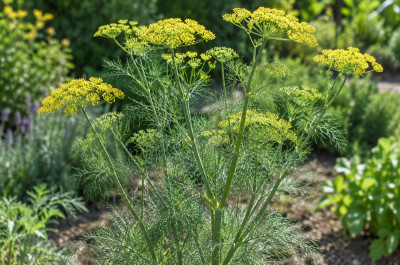
Common fennel is a tall, fragrant herb. It has soft, feathery leaves and clusters of tiny yellow flowers. Its botanical name is Foeniculum vulgare. It belongs to the carrot family, also called Apiaceae.
People have grown fennel for food since ancient times. However, it can escape from gardens and grow as a wild weed. You may see it along roads, on dry hillsides, in empty lots, and near old gardens.
Common fennel offers several garden benefits. Its flowers feed helpful insects. Its leaves provide food for some butterfly caterpillars. You can also use many parts of the plant in the kitchen.
However, gardeners must control fennel carefully. It can spread quickly and become invasive in some areas.
What Does Common Fennel Look Like?
Common fennel often grows between 4 and 6 feet tall. In good conditions, it may grow even taller.
Its smooth, upright stems are green and may have light grooves. The leaves divide into many thin sections. This gives them a soft and feathery look.
During summer, fennel produces many small yellow flowers. They grow in flat or slightly rounded clusters called umbels. These flower clusters look a little like open umbrellas.
After flowering, the plant forms small, dry fruits. People commonly call these fruits fennel seeds.
What Does Common Fennel Smell Like?
Fennel has a strong and easy-to-notice smell. Crushed fennel leaves and stems give off a sweet scent. However, do not crush or handle an unknown wild plant with bare hands.
People often compare fennel’s smell to anise or licorice. The leaves, stems, flowers, and seeds all carry this scent. Wild common fennel may taste stronger than fennel bought at a grocery store.
Never use smell alone to identify a wild plant.
Common Fennel vs. Florence Fennel
Common fennel and Florence fennel belong to the same species. However, people grow them for different reasons.
Common fennel is also called herb fennel. People mainly grow it for its feathery leaves, flowers, pollen, and seeds. The base may become thick, but it does not normally form the large, firm bulb sold in stores.
Florence fennel is a special type grown for its swollen leaf bases. These thick layers form what cooks call a fennel bulb.
Choose Florence fennel if you want to harvest large bulbs. Choose common fennel if you want leaves, flowers, seeds, or a tall plant that attracts insects.
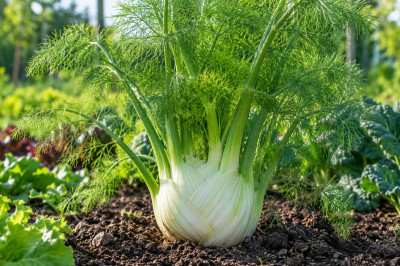
Picture of Florence fennel.
Is Common Fennel a Weed?
Common fennel can be a useful herb or a troublesome weed. It depends on where it grows and how quickly it spreads.
In a managed herb garden, fennel can provide food and shelter for wildlife. When it escapes, it may form thick patches that crowd out other plants.
The plant can become a serious problem in some warm, dry areas. For example, the California Invasive Plant Council lists fennel as an invasive plant. It can change grasslands, coastal areas, wetlands, and other natural plant communities [1].
Always check local invasive-plant lists and rules before growing common fennel.
Where Does Common Fennel Grow?
Common fennel is native to a wide area. Its native range stretches from the Mediterranean region to Ethiopia and western Nepal [2].
People have introduced it to many other parts of the world.
Wild fennel often appears in places where the soil has been dug up or changed. It may grow beside roads, along field edges, near paths, on slopes, and around old gardens.
It grows best in sunny, open areas. Once established, its long roots help it survive dry weather.
Is Common Fennel Edible?
Yes. Properly identified common fennel is edible.
You can eat the young leaves, tender stems, flower buds, open flowers, pollen, and mature seeds. Older stems are often too tough to eat.
Common fennel does not normally produce the plump bulb found on Florence fennel.
What Does Common Fennel Taste Like?
Common fennel has a sweet, herbal taste. Its flavor is often compared to anise or licorice.
Young leaves usually have a softer flavor than older leaves. The flowers and pollen have a sweet but stronger taste. Mature seeds have a warm and powerful flavor.
Older stems may have plenty of flavor, but they can become tough and stringy.
Nutrient Content of Fennel
The amount of nutrients in fennel depends on the plant part. The bulb, leaves, stems, and seeds do not contain the same amounts.
Florence fennel bulbs are mostly water and low in calories. One cup of sliced raw bulb has about 27 calories and nearly 3 grams of fiber. It also provides vitamin C, potassium, and small amounts of calcium and other nutrients [3].
Common fennel does not normally make this type of bulb.
People usually eat fennel leaves in small amounts. The leaves may not add large amounts of nutrients to a meal, but they can add flavor without much salt, sugar, or fat.
Fennel seeds contain fiber, minerals, oils, and natural compounds that give them their smell and flavor. The taste is strong, so you usually need only a small amount.
Common Fennel Benefits for Pollinators
One of fennel’s best garden benefits comes from its flowers. Each large flower head holds many tiny blooms that small insects can reach easily.
Bees, hoverflies, small wasps, beetles, and other insects may visit the flowers for nectar or pollen. Some of these insects help pollinate plants. Others hunt aphids and small garden pests.
Fennel flowers can add food and insect activity to a wildlife-friendly garden.
However, do not plant common fennel in a place where it is invasive. Choose a safe, non-invasive flowering plant instead.
A Host Plant for Swallowtail Butterflies
Fennel can serve as a host plant for some swallowtail butterflies. A host plant is a plant that caterpillars use for food.
Female butterflies may lay eggs on fennel. After the eggs hatch, the caterpillars eat the leaves, flowers, or seeds.
Black swallowtail caterpillars feed on fennel and other plants in the carrot family [4]. Other swallowtail species may also use fennel, depending on where you live.
Caterpillars may eat some leaves, flowers, and seeds. However, black swallowtail caterpillars rarely cause serious harm to a healthy fennel plant.
Do not spray the caterpillars if you are growing fennel as a butterfly plant.
Shelter for Helpful Insects
A fully grown fennel plant has many stems, branches, and flower clusters. Spiders and helpful insects may move through the plant while searching for prey.
Birds may also visit the seed heads or search for insects among the stems.
If fennel is invasive where you live, do not allow it to produce mature seeds. Cut off the flower heads before the seeds turn brown and begin to fall.
You may leave clean, seed-free stems standing for a short time. Remove stems that show signs of disease.
How Common Fennel Grows
Common fennel is a perennial plant in mild climates. This means it can live for more than two years.
In cold places, gardeners may grow it as an annual. An annual finishes its life cycle in one growing season. In some areas, frost kills the leaves and stems, but the base of the plant survives and grows again in spring.
Young fennel first produces soft leaves. As the plant grows, tall flowering stems rise above the leaves. Seeds develop after insects visit and pollinate the flowers.
One large plant can produce many seeds. These seeds may fall onto the ground and grow into new plants.
How to Grow Common Fennel from Seed
Sow fennel seeds directly where you want the plants to grow. Fennel develops a long main root and may not grow well if that root is disturbed.
Cover the seeds with a thin layer of soil. Keep the soil damp but not soggy until the seeds sprout.
Thin crowded seedlings after they appear. Each plant needs enough room, sunlight, and moving air.
Good spacing also makes fennel easier to harvest and control.
Does Common Fennel Need Fertilizer?
Fennel usually grows well in average garden soil. Very rich soil or too much nitrogen can produce lots of soft leaves and tall, weak stems.
Mix a small amount of finished compost into poor soil before planting. A soil test can tell you if the soil needs more nutrients.
Avoid heavy feeding if the plant already looks green and grows quickly.
Can Fennel Be Used as a Companion Plant?
Fennel attracts helpful insects, but it is not always a good plant to grow close to vegetables.
It can grow tall enough to shade smaller crops. Its roots and leaves also compete with nearby plants for water, nutrients, sunlight, and space.
Some companion-plant guides claim that fennel releases chemicals that stop other plants from growing. However, these guides often make the claim sound more certain than the evidence shows.
The safest choice is to give fennel its own growing area. A separate spot will also make it easier to remove seedlings and stop the plant from spreading.
How to Harvest Fennel Leaves
Pick young fennel leaves when they are soft and fresh. Cut only a few sprigs from each plant so it can continue growing.
Harvest the leaves in the morning after the dew dries. Place them in a clean container and keep them cool.
Rinse the leaves before using them. Check them carefully for insects and eggs.
How to Harvest Fennel Flowers and Pollen
Pick fennel flowers after the tiny yellow blooms open. The flowers are edible and have a mild anise or licorice flavor [5].
Cut clean flower heads and shake them gently to remove small insects. You can sprinkle a few flowers over salads, soups, vegetables, and other foods.
Fennel pollen has a strong flavor. To collect it, place dry flower heads on clean paper. Allow them to dry, and then gently tap or shake out the pollen. Sift out any pieces of flowers or insects before storing it.
How to Collect Fennel Seeds
Leave some flower heads on the plant until the seeds turn brown or tan. Cut the heads before all the seeds fall to the ground.
Place the flower heads upside down in a paper bag. Keep the bag in a dry place with good airflow.
As the heads dry, the seeds will drop into the bag.
Make sure the seeds are fully dry. Store them in a labeled, airtight container away from heat, light, and moisture.
Ways to Use Common Fennel in the Kitchen
Chop young fennel leaves and add them to salads, soups, sauces, eggs, potatoes, beans, fish, or roasted vegetables.
You can chop tender stems and add them to cooked dishes. Tough stems can add flavor to soup stock or foods cooked in the oven. Remove them before serving if they remain stringy.
Fennel flowers make an attractive edible garnish. You can also use the flavorful pollen as a seasoning.
Add fennel seeds to bread, sausages, pickles, spice mixes, sauces, and warm drinks. Begin with a small amount because wild fennel may have a strong taste.
Important Identification Warning
Never eat a wild plant just because it has feathery leaves or umbrella-shaped flower clusters.
Fennel belongs to the same plant family as poison hemlock and water hemlock. These plants are extremely poisonous and can kill people or animals.
Fennel usually has a strong anise smell, yellow flowers, and finely divided leaves. Poison hemlock often has white flowers and purple spots or marks on its smooth stems.
However, purple spots and other common signs may not appear during every stage of poison hemlock’s growth [6]. Never depend on one feature, including smell, to identify a wild plant.
Check several features, including the leaves, stems, flowers, smell, and growth pattern. Use a trusted regional plant guide.
If you are not completely sure, do not taste, eat, or harvest the plant. Avoid handling unknown plants with bare hands. Ask an experienced local botanist, forager, or extension professional to identify it.
Never gather fennel from roadsides, sprayed areas, polluted soil, or places where pets regularly relieve themselves.
How to Control Common Fennel
Remove flower heads before the seeds mature if you do not want new plants. Check the soil often and pull young seedlings while they are small.
Large fennel plants may grow again if you cut off only the top. Dig out as much of the root and base as possible. Check the area again and remove any new shoots.
Do not place mature seed heads in a basic compost pile. Some seeds may survive and spread when you use the compost.
Follow local disposal rules if common fennel is listed as an invasive or harmful weed in your area.
Is Common Fennel Worth Growing?
Common fennel can be a useful edible plant when grown responsibly. It provides fragrant leaves, flowers, pollen, and seeds. It can also feed pollinators and some swallowtail caterpillars.
However, common fennel grows tall, competes with nearby plants, and spreads easily through seed. Give it plenty of room. Harvest it often, and remove unwanted flower heads before the seeds mature.
Do not plant common fennel where it is invasive or restricted. In those areas, grow a safe native plant that offers similar benefits to insects.
With careful control and correct identification, common fennel can earn a useful place in an edible weed garden.




Add comment