

 Sasha Campbell
Common lamb’s quarters (Chenopodium album) is often pulled from gardens without a second thought. Yet this common weed is also an edible leafy plant with a long history of use as food.
Sometimes called lambsquarters, white goosefoot, or wild spinach, this fast-growing plant can appear in vegetable beds, farm fields, compost-rich soil, and other disturbed places.
For gardeners who know how to identify and manage it, common lamb’s quarters can provide edible greens while also offering clues about what is happening in the garden.
What Is Lamb’s Quarters?
Lamb’s quarters belongs to the amaranth family (Amaranthaceae) [1]. This plant family also includes spinach, beets, quinoa, and amaranth.
The plant grows from seed each year. It can grow quickly in warm weather and may reach several feet tall under good conditions.
Although gardeners usually treat it as a weed, people have eaten lamb’s quarters for generations. You can prepare its young leaves and shoots much like spinach.
How to Identify Common Lamb’s Quarters
Correct identification is very important before eating any wild plant.
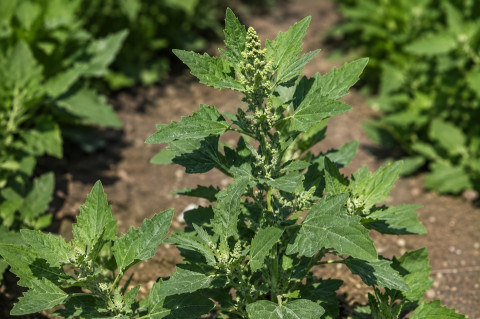
Common lamb’s quarters usually has upright, branching stems. Young stems are green, while older stems may develop reddish or purple streaks.
The leaves can vary in shape. Lower leaves are often triangular, diamond-shaped, or somewhat goosefoot-shaped. Upper leaves are usually narrower.
One of its most useful identification features is the pale, powdery-looking coating found on young leaves and growing tips. This coating can make the plant look gray-green or slightly dusty.
The leaf edges may be smooth or have uneven teeth. The leaves grow alternately along the stem rather than directly opposite each other.
Its flowers are very small and green. They form dense clusters near the top of the plant and along the upper stems. The flowers are not large or showy.
Where Does Lamb’s Quarters Grow?
Common lamb’s quarters grows across much of the world. It is especially common in temperate regions.
You may find it in vegetable gardens, crop fields, compost areas, roadsides, vacant lots, and other places where the soil has been disturbed.
It often does especially well in fertile garden soil.
A freshly prepared vegetable bed can create good growing conditions. Digging may bring buried seeds closer to the soil surface, where moisture and suitable temperatures can help them germinate.
How Common Lamb’s Quarters Grows
Common lamb’s quarters is an annual. This means it completes its life cycle in one growing season.
Seeds usually germinate when conditions become favorable. The young plants first form tender leaves close to the ground. As they grow, they develop upright stems with many branches.
Eventually, small flower clusters appear.
These flowers produce many seeds. Some of the seeds can remain in the soil for many years, which is one reason lamb’s quarters can return to a garden even after plants have been removed.
Is Common Lamb’s Quarters Edible?
Yes. Properly identified common lamb’s quarters has edible leaves and young shoots.
Young leaves are generally the best choice because they are softer and milder than older leaves. You can also harvest the tender tips before the plant becomes tough.
Can You Eat the Seeds?
Yes. Lamb’s quarters seeds have also been used as food. However, the seeds are very small, so collecting enough can take time.
Most home gardeners find the young leaves and tender shoots much easier to harvest and prepare.
What Does Lamb’s Quarters Taste Like?
Lamb’s quarters has a mild, green flavor that is often compared with spinach.
Young leaves are tender enough for some raw uses. Older leaves become firmer and are generally better cooked.
Its mild taste makes the plant easy to add to many simple meals without overpowering other ingredients.
Nutrients in Lamb’s Quarters
One of the main benefits of lamb’s quarters as an edible weed is its nutrient content [2].
The leaves provide vitamin C, carotenoids such as beta-carotene (which the body can use to make vitamin A), vitamin K, folate, and several minerals. They can also provide calcium, magnesium, potassium, and iron.
Exact nutrient levels vary. Growing conditions, soil, plant age, harvest time, and preparation methods can all affect the final nutrient content.
For this reason, it is better to think of lamb’s quarters as a nutritious leafy green rather than expect every plant to contain the same amount of each nutrient.
A Wild Alternative to Spinach
Lamb’s quarters is sometimes called wild spinach because the two plants can be used in similar ways in the kitchen.
You can cook the leaves as greens or add them to dishes where you might normally use spinach. However, lamb’s quarters is not actually a type of spinach.
Both plants belong to the same broad plant family, but they are different species.
When and How to Harvest Lamb’s Quarters
For the best eating quality, harvest lamb’s quarters while the plants are young and tender.
You can pinch off individual leaves or harvest the tender growing tips. Regularly picking the growing tips can encourage branching and more tender shoots.
As the plant gets older and begins flowering, the leaves and stems may become tougher and less appealing.
How to Eat Common Lamb’s Quarters
Young lamb’s quarters leaves are sometimes eaten raw in small amounts. However, many people prefer to cook the leaves, especially when eating larger servings.
Try using cooked lamb’s quarters in soups, stews, egg dishes, pasta, or mixed greens.
You can also lightly steam, sauté, or boil the leaves and serve them as you would other leafy vegetables.
Oxalates in Lamb’s Quarters
Like spinach, beet greens, and several other leafy vegetables, lamb’s quarters contains oxalates [3].
Oxalate levels can vary, and cooking methods such as boiling can reduce some soluble oxalates because they move into the cooking water.
If you boil the greens for this purpose, discard the water rather than using it in another dish.
People told by a healthcare professional to limit high-oxalate foods should follow that advice.
Saponins and Other Natural Plant Compounds
Lamb’s quarters contains several natural plant compounds, including saponins. These compounds are also found in many other edible plants.
Cooking and other food preparation methods may reduce the levels of some of these compounds.
Garden Benefits of Lamb’s Quarters
Lamb’s quarters can have a place in a garden when it is carefully managed. Its leaves provide edible greens, while its seeds may feed some seed-eating birds.
A few managed plants are very different from a large patch competing with vegetables.
How Lamb’s Quarters Covers Bare Soil
Young lamb’s quarters can quickly cover open soil. Its leaves shade some of the soil beneath the plant.
However, this does not make lamb’s quarters a good living mulch. The plant can grow tall and compete with vegetables for water, light, nutrients, and space.
If you keep a few plants for food, grow them away from young vegetables and remove them before they produce unwanted seeds.
What Lamb’s Quarters May Tell You About Your Soil
Lamb’s quarters commonly appears in disturbed, cultivated, and fertile soils, including vegetable gardens.
A healthy patch may mean that the conditions are good for its seeds to germinate and grow.
You should not use the weed by itself as a soil test.
If you need to know your soil’s pH or nutrient levels, a proper soil test will provide much more useful information.
Lamb’s Quarters and Compost
You can usually add young lamb’s quarters plants to a compost pile if they are disease-free and have not formed mature seeds.
Plants with mature seeds need more care.
If your compost does not get hot enough to kill the seeds, you may spread lamb’s quarters back into the garden when you use the finished compost.
For that reason, it is safer to compost young plants before they set seed.
Can it Take Over the Garden?
Lamb’s quarters can become a serious garden weed if it is allowed to produce lots of seed.
A single mature plant can produce many thousands of seeds under favorable conditions. Those seeds can build up in the soil and continue appearing in later growing seasons.
The easiest solution is simple: harvest or remove unwanted plants before their seeds mature.
Lamb’s quarters also grows quickly and can compete with vegetables for light, water, space, and nutrients. This is especially important around young crops.
Small vegetable seedlings can struggle when surrounded by fast-growing weeds.
If you want to keep lamb’s quarters as an edible plant, choose a few plants in suitable spots and remove the rest. This gives you edible greens without allowing the weed to take over your beds.
Growing Lamb’s Quarters on Purpose
You may not need to plant lamb’s quarters if it already grows naturally in your garden. If you do grow it intentionally, select an area where you can control its spread.
Lamb’s quarters grows well in full sun but can also handle some light shade. It grows in many types of soil, but it may grow especially fast in rich, fertile garden soil.
Water young plants during dry periods if you want tender leaf growth.
Remember that one plant allowed to produce mature seed can create many new plants later. If you are growing lamb’s quarters mainly for its leaves, remove the plants before the seeds mature.
Keeping the Plant Under Control
The key to growing lamb’s quarters intentionally is preventing unwanted seed production. Harvest the leaves regularly while the plants are young.
You can pinch back the growing tips to keep plants shorter and encourage fresh shoots.
Once flowers appear, decide whether you want the plants to produce seeds. If not, remove them before the seeds mature.
For an edible weed garden, keeping a few plants can supply nutritious leafy greens. Regular harvesting keeps the plants productive while helping control their size.
Look-Alikes and Identification Safety
Never identify an edible wild plant from one feature alone.
Leaf shape can vary greatly on common lamb’s quarters. Young plants may also look different from mature plants. Other goosefoot plants and some young garden weeds can look similar.
Check several features together. Look for alternate leaves, variable leaf shapes, a pale mealy coating on young growth, upright branching stems, and tiny green flower clusters.
If you are unsure, do not eat the plant. Use a trusted regional field guide or ask an experienced forager to confirm its identity.
Safety First
Only eat a wild plant when you are 100% sure of its identity.
Even correctly identified lamb’s quarters may not be suitable for eating if it grows in a contaminated location.
Avoid plants growing beside busy roads, in areas sprayed with herbicides or pesticides, near industrial sites, or in places where you do not know the chemical history.
Also avoid areas that may be contaminated by animal waste or polluted water. Plants growing in polluted soil or water may be exposed to unwanted contaminants, so where you harvest matters.
Other Wild Edible Plants
Lamb’s quarters is only one of many edible plants that may already be growing around your garden.
Dandelion, stinging nettle, greater burdock, purslane, and chickweed are other edible weeds worth learning about.
Takeaway
Common lamb’s quarters is easy to overlook because it often appears on its own.
Yet this fast-growing annual provides edible leaves and tender shoots that can be prepared much like spinach. Its leaves contain useful vitamins, minerals, and plant pigments.
The biggest challenge is controlling the plant before it produces large amounts of seed. Harvest young leaves, keep only the plants you want, and remove unwanted plants before their seeds mature.
With correct identification and careful management, this common garden weed can become a useful plant in an edible weed garden.




Add comment