

 Sasha Campbell
Broadleaf plantain is one of those plants that many gardeners pull up without giving it a second thought. It often appears in lawns, garden paths, fields, and other disturbed places.
However, this common weed has more to offer than you might think.
Broadleaf plantain (Plantago major) is an edible perennial plant [1]. Its young leaves can be eaten, and its seeds are also edible. The plant contains useful nutrients and can grow in places where many garden plants struggle.
It can even tell you something about the condition of your soil.
Before adding broadleaf plantain to your edible weed garden, it helps to understand how to identify, grow, harvest, and use it.
What Is Broadleaf Plantain?
Broadleaf plantain is a low-growing plant in the Plantaginaceae family [2]. Its scientific name is Plantago major.
It is not related to the banana-like fruit that is also called plantain.
Instead, this plant forms a flat cluster, or rosette, of leaves close to the ground. It is a perennial, so established plants can live for more than one growing season.
Broadleaf plantain is common in lawns and other places where the soil is often disturbed or walked on.
How to Identify Broadleaf Plantain
Broadleaf plantain is fairly easy to recognize once you know what to look for.
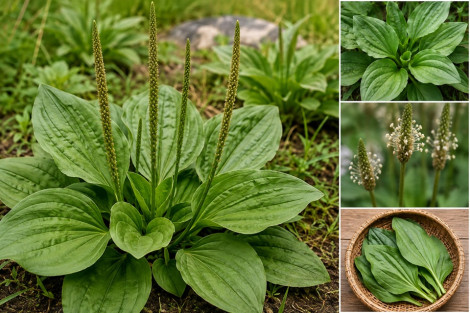
The leaves are broad, oval, or egg-shaped. They grow from a central point at ground level.
One of the easiest features to spot is the leaf veins. Several strong veins run from the base of each leaf toward the tip. The leaves form a low rosette close to the ground.
Each leaf has its own stalk. When the plant flowers, thin stalks rise from the center and hold narrow flower spikes.
How Broadleaf Plantain Grows
Broadleaf plantain stays fairly low to the ground.
Its leaves spread outward rather than forming a tall upright plant. When it flowers, long stalks rise from the center of the leaf rosette.
The flowers themselves are tiny and easy to overlook.
As the flower spikes mature, they produce many small seeds. Broadleaf plantain spreads mainly by these seeds.
This is one reason the plant can quickly appear in lawns, paths, beds, and other open areas.
Broadleaf plantain is also remarkably adaptable. You may find it growing in:
- Lawns
- Garden paths
- Fields
- Pastures
- Roadsides
- Garden beds
- Disturbed ground
- Areas with compacted soil
It is especially common in places that receive regular foot traffic.
Finding plantain in hard-packed areas does not mean the plant created the compaction. Rather, it can tolerate conditions that are difficult for many other plants.
What Broadleaf Plantain May Tell You About Your Soil
Gardeners sometimes call plantain an “indicator plant.”
A large amount of broadleaf plantain in one area may be a clue that the soil is compacted or that lawn grass is thin and struggling.
That makes the weed useful to observe.
Instead of simply pulling every plant, look at where it is growing. Heavy plantain growth along a walkway, for example, may tell you that the ground receives a lot of traffic.
However, plantain alone cannot give you a complete soil test. If you want to know your soil’s pH or nutrient levels, a proper soil test is much more reliable.
Is Broadleaf Plantain Edible?
Yes. Broadleaf plantain is an edible wild green.
The leaves are the part most commonly gathered. Young leaves are generally preferred because older leaves become tougher and more fibrous.
The seeds are edible as well.
Broadleaf plantain has a long history of being gathered as a food plant, especially when young greens are available in spring.
If you have never eaten broadleaf plantain before, start with a small amount.
What Do Broadleaf Plantain Leaves Taste Like?
Young broadleaf plantain leaves have a mild, earthy green flavor.
As the leaves get older, they become stronger tasting and much tougher.
For this reason, tender young leaves are better for raw dishes. Larger leaves are usually more enjoyable when cooked.
Removing some of the tough strings or thick leaf stalks can also improve the texture.
Nutrients in Broadleaf Plantain
Broadleaf plantain is more than just something green you can eat.
Studies of Plantago major have found vitamin C and carotenoids in its leaves [3]. Carotenoids include compounds that can act as precursors to vitamin A. Researchers have also identified fatty acids and various plant compounds in the leaves.
The plant can also contain mineral elements. However, exact nutrient levels vary depending on the soil, growing conditions, leaf age, and other factors.
This makes broadleaf plantain an interesting wild green to add to a varied diet rather than something that needs to be treated as a supplement or medicine.
Vitamin C
Fresh plantain leaves contain vitamin C.
The exact amount can vary. One review reported different vitamin C levels depending on the age of the plants and the study being examined.
That variation is normal with wild plants. Soil, weather, plant age, harvest time, and growing conditions can all affect nutrient content.
Vitamin K
Broadleaf plantain leaves also contain vitamin K1 [[3]]. Vitamin K is a nutrient found in many green plants.
Like other nutrients in wild plants, the amount can vary with growing conditions and the age of the leaves.
Carotenoids
Plantain leaves also contain carotenoids.
Some carotenoids, including beta-carotene, can be converted into vitamin A by the body.
Again, the amount in a plant can vary, so it is better to think of broadleaf plantain as one of many nutritious leafy greens rather than focus on a single nutrient number.
Minerals
Researchers have found several mineral elements in Plantago major.
Broadleaf plantain can also contain minerals such as iron, zinc, copper, and manganese [4]. The amounts can vary greatly depending on the soil and growing conditions.
This brings up an important point about harvesting wild plantain.
Plants can take up elements from their surroundings. Therefore, where you harvest is just as important as what you harvest.
Garden Benefits of Broadleaf Plantain
Broadleaf plantain can provide benefits beyond being edible.
Its low-growing leaves can cover small patches of bare ground. The plant can also survive mowing and foot traffic better than many tender garden plants.
Most importantly, its presence can encourage you to pay closer attention to your soil.
A patch of plantain may be telling you that the area is frequently disturbed or that other plants are having difficulty competing there.
Ground Cover
The leaves of broadleaf plantain form a rosette that can cover exposed ground.
This living cover can help occupy small bare spaces where unwanted weeds might otherwise germinate. However, plantain should not be treated as a replacement for mulch throughout a vegetable garden.
Because it produces many seeds, allowing too many plants to mature can create more plantain than you want. The goal in an edible weed garden is usually management rather than letting one plant take over.
Broadleaf Plantain and Garden Wildlife
Broadleaf plantain can become part of a diverse garden, but it is not one of the best plants for feeding pollinators.
Its flowers are tiny and do not offer the same resources as many showy flowering plants. Broadleaf plantain can pollinate itself, and wind can also help move its pollen.
If your main goal is to help bees, butterflies, and other pollinators, grow flowering plants that are native to your area. You can still leave a small patch of plantain if you want it for food or plant diversity.
Can You Grow Broadleaf Plantain on Purpose?
Yes. Although many people try to remove broadleaf plantain from lawns, you can grow it on purpose in an edible weed garden.
Growing your own has one major advantage: you know where the plants came from.
You can avoid harvesting plants that may have been exposed to herbicides, pesticides, road pollution, pet waste, or other contaminants.
Where to Plant
Choose an area where you can keep the plants under control.
A small edible weed bed, raised bed, or large container can work well.
Plantain is adaptable, so you usually do not need to give it the richest part of your vegetable garden.
A controlled growing space also makes it easier to remove flower spikes before too many seeds mature.
Growing From Seed
Broadleaf plantain spreads easily from seed. Sow the seeds in soil and keep the area moist while they begin to grow.
Once established, the plant develops its familiar low leaf rosette.
If you grow it for food, harvest the young leaves as needed. The plant can continue producing new leaves from the center of the rosette.
Sunlight and Water
Broadleaf plantain is not a fussy plant. It grows well in sunny areas but can also handle some shade.
Keep the soil moist while young plants become established. Once growing well, plantain can handle tougher conditions than many garden greens.
It can grow in several soil types, including heavy or compacted soil. However, giving the plants enough water and room to grow can encourage healthy leaf growth.
When to Harvest Broadleaf Plantain
For eating, harvest the leaves while they are young and tender.
Younger leaves generally have a better texture. Older leaves develop strong fibers and can become difficult to chew raw.
Harvesting after fresh new growth appears can give you better-quality leaves.
Take only what you need and allow the plant to continue growing if you want another harvest.
How to Eat Broadleaf Plantain Leaves
Young leaves can be chopped and added to salads in small amounts.
You can also use them in:
- Soups
- Stews
- Stir-fries
- Cooked greens
- Egg dishes
- Savory fillings
Older leaves are usually better cooked.
Cooking softens the leaves and makes their tough fibers less noticeable.
Don’t Confuse Broadleaf and Narrowleaf Plantain
Broadleaf plantain is not the only common Plantago species.
Narrowleaf or buckhorn plantain (Plantago lanceolata) has much narrower, lance-shaped leaves.
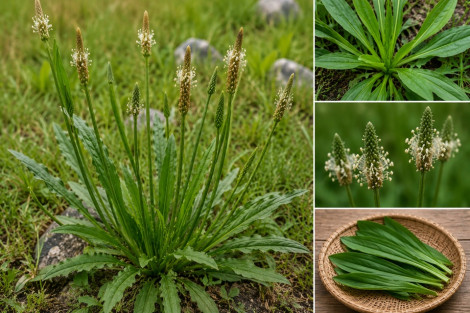
Picture of Narrowleaf or buckhorn plantain (Plantago lanceolata).
Broadleaf plantain has wider, more rounded leaves.
Learning the scientific name Plantago major can be helpful because common names sometimes vary from place to place.
Safety First
Never gather edible plantain simply because you see it growing.
Avoid plantain growing beside busy roads or near industrial areas.
Also avoid places treated with herbicides or pesticides and areas where pets often use the bathroom. Broadleaf plantain can take up some pollutants from contaminated soil, so where you harvest matters.
Growing your own plantain is one of the easiest ways to know how the plants have been treated.
Additionally, wild food identification should never be based on a single feature.
Check the entire plant. Look at the broad leaf shape, strong veins, basal rosette, leaf stalks, and distinctive flower spikes.
If you are not completely sure that a wild plant is broadleaf plantain, do not eat it.
A good regional field guide or knowledgeable local expert can help confirm identification.
Quick Identification Checklist
Before harvesting, check for broad, oval leaves that grow in a low rosette.
Look for several strong veins running from the base toward the tip of each leaf. Mature plants should also have thin stalks with narrow flower or seed spikes.
Do not rely on just one feature. If you are not completely sure of the plant’s identity, do not eat it.
Takeaway
Broadleaf plantain does not have to be viewed as just another lawn weed.
For an edible weed garden, it has several useful qualities. The young leaves and seeds are edible, the leaves contain vitamin C and carotenoids, and the plant is remarkably tolerant of difficult growing conditions.
It can also give gardeners clues about heavily used or compacted areas.
At the same time, broadleaf plantain produces plenty of seed. If you decide to keep it, manage the flower spikes so it does not spread farther than you want.
A small, controlled patch is usually plenty.
Once you learn to recognize Plantago major, you may start seeing this overlooked edible plant everywhere.




Add comment