

 Andre Campbell
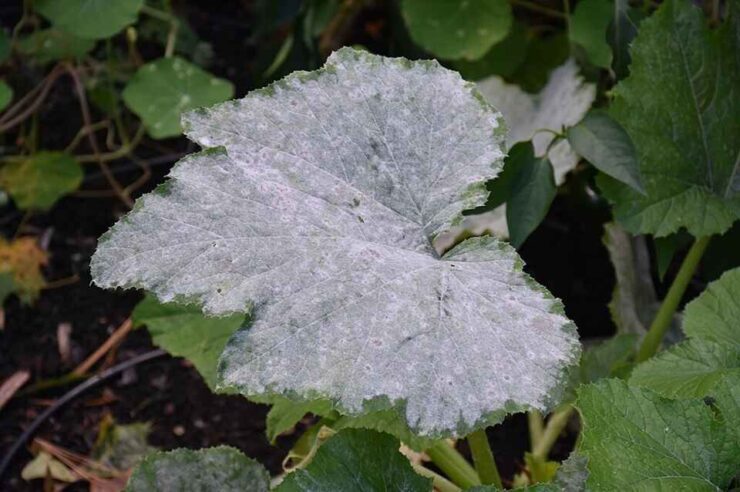
It may start as a few grayish-white, powdery spots on your plant’s leaves. Left unchecked, powdery mildew can spread across the plant and to other plants that are vulnerable to that type of mildew [1].
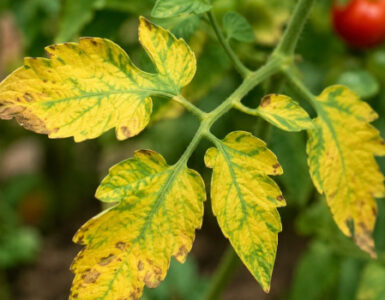
As the infection spreads, it can weaken the plant. The leaves may curl, twist, turn yellow, or dry out. Severe infections may also reduce flowering or fruit production.
Powdery mildew can affect fruit trees, vegetables, herbs, and many flowering plants. However, different types of powdery mildew attack different plants. For example, the fungus affecting squash may not infect a rose bush.
What Causes Powdery Mildew?
Powdery mildew spreads through tiny spores carried by wind.
It often grows well during warm days, cool nights, and periods of high humidity. Crowded plants and poor airflow can also make the disease worse [2].
Unlike many fungal diseases, powdery mildew usually does not need wet leaves to infect a plant.
How to Get Rid of Powdery Mildew Naturally
Below are some natural remedies and organic products you can try. Treatments work best when you use them at the first sign of the disease.
Always test a spray on a few leaves first. Wait at least 24 hours to check for damage before spraying the entire plant.
1. Horticultural Oil
Horticultural oil can help control mild powdery mildew infections. It coats the fungus and may stop spores from spreading.
Choose a horticultural oil product labeled for powdery mildew. Mix and apply it exactly as directed on the label.
Spray the tops and undersides of the leaves for good coverage. Do not apply the oil when the weather is very hot or when plants are dry and stressed.
Some plants are sensitive to oil sprays. Also, avoid using horticultural oil close to a sulfur treatment unless both product labels say it is safe.
2. Neem Oil
Neem oil is a natural product that gardeners use to control certain pests and plant diseases. It may help slow powdery mildew when the infection is still mild.
Choose a neem oil product labeled for powdery mildew. Mix and apply it according to the directions because neem products come in different strengths.
Spray both the tops and undersides of the leaves. Apply the product early in the morning or late in the evening to reduce the risk of leaf burn.
Do not spray neem oil on a hot day or on a dry, stressed plant.
3. Baking Soda
You can make a preventive powdery mildew spray using baking soda. Baking soda may make the leaf surface less suitable for the fungus.
However, baking soda alone does not always provide dependable control. It works best as a preventive treatment or when the disease has just started.
To make a spray, combine 1 tablespoon of baking soda, ½ teaspoon of horticultural oil, and 1 gallon of water. Shake the mixture well.
Spray a small part of the plant first because the mixture may burn sensitive leaves. Reapply after heavy rain washes the spray away. Stop using it if you notice leaf damage.
Do not use this spray close to a sulfur treatment unless the product labels say it is safe.
4. Improve Air Circulation
Give your plants enough room to breathe. Follow the recommended spacing when planting seeds or young plants.
Prune or thin crowded growth when it is safe for the plant. Better airflow helps lower humidity around the leaves and may slow the spread of powdery mildew.
Do not remove too many healthy leaves. Plants still need their leaves to make food and grow.
5. Water Near the Base
When possible, water plants near the soil instead of spraying the foliage.
Powdery mildew does not usually need wet leaves to spread. However, watering near the base can help reduce humidity inside crowded plants. It may also lower the risk of other plant diseases.
Water early in the day so any wet leaves can dry quickly.
6. Potassium Bicarbonate
Potassium bicarbonate is one of the more effective treatments for powdery mildew. It is a contact fungicide, which means it works where the spray touches the fungus.
Choose a potassium bicarbonate product labeled for powdery mildew. Mix and apply it exactly as directed.
Cover both the tops and undersides of the leaves. You may need to reapply after rain or as directed on the label.
Potassium bicarbonate may damage heavily infected leaves. Always test it on a small part of the plant first, and do not apply more than the label recommends.
Avoid spraying during the hottest part of the day.
7. Cueva
Cueva is a brand of liquid copper fungicide.
The label says it helps control several plant diseases, including powdery mildew on certain plants. However, you must check the label to make sure your crop and disease are listed.
Cueva is OMRI Listed for use in organic production. This does not mean it is harmless. Mix and apply it exactly as directed.
Too much copper can damage plants and build up in the soil over time.
8. Bonide Liquid Copper Fungicide
Bonide Liquid Copper Fungicide is another copper-based product.
Depending on the label, it may control powdery mildew, plant rust, downy mildew, and other diseases on certain plants.
Check that your plant and disease are listed before using it. Follow all directions about mixing, protective clothing, application timing, and the number of days to wait before harvesting edible crops.
Avoid using more copper than needed because it can collect in the soil.
9. Banish
Banish is a commercial fungicide made with plant-based ingredients.
It may help control powdery mildew and some other plant diseases. Check the current label to make sure it is approved for your plant and the disease you want to treat.
Apply it exactly as directed. Even a plant-based product can harm leaves if it is mixed too strongly or used during unsuitable weather.
10. Milk
Milk spray is sometimes used to help prevent powdery mildew on certain plants.
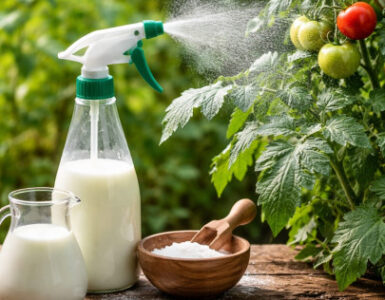
To make the spray, mix 1 to 2 cups of milk with enough water to make 10 cups of solution. Skim or low-fat milk is often preferred because it leaves less fat on the leaves.
Spray the foliage thoroughly once a week. Reapply after heavy rain.
Remove only badly infected leaves. Do not remove so many leaves that the plant can no longer grow well.
Research suggests that milk sprays may help reduce powdery mildew on pumpkins and certain other plants. However, the results can vary [3].
11. Sulfur Fungicide
Sulfur has been used for many years to manage powdery mildew. It works best as a preventive treatment or when the disease is still mild.
Choose a sulfur fungicide labeled for your plant and powdery mildew. Apply it exactly as directed.
Sulfur can burn leaves during hot weather. It may also damage certain plants, including some squash and melon varieties.
Never apply sulfur close to an oil spray unless both labels say it is safe. Using sulfur and oil too close together can badly damage plants.
12. Biological Fungicide
Biological fungicides contain helpful microorganisms that can help protect leaves from disease. Some products contain strains of beneficial bacteria such as Bacillus subtilis or Bacillus amyloliquefaciens.
These products work best before the disease appears or when you first notice it. They may protect healthy leaves and slow new infections, but they will not repair damaged leaves.
Choose a biological fungicide labeled for powdery mildew and your plant type. Follow the storage, mixing, and application directions carefully because these products contain living organisms.
13. Remove Infected Plant Parts
Remove leaves and stems that are badly infected. This may reduce the number of spores around the plant.
Do not strip off every affected leaf if doing so would leave the plant almost bare. Remove the worst leaves first, then continue watching the plant.
Place infected material in the trash or follow local disposal guidance. Do not leave it beside healthy plants.
Clean pruning tools after working with infected plants, especially before using them on healthy plants.
14. MilStop SP Foliar Fungicide
MilStop is a potassium bicarbonate-based fungicide used to control powdery mildew and certain other plant diseases.
It works on contact, so complete spray coverage is important. It may also help protect healthy plant tissue when used as directed.
Check the label to make sure your plant is listed. Follow the exact mixing rate, application schedule, safety directions, and harvest instructions.
How to Prevent Powdery Mildew
- Choose powdery mildew-resistant plant varieties when available.
- Space plants properly.
- Grow plants in sunny locations when suitable for that plant.
- Water early in the day.
- Water near the base of plants when possible.
- Avoid applying too much nitrogen fertilizer.
- Prune crowded growth to improve airflow.
- Check plants often for early signs of disease.
- Remove badly infected leaves and plant debris.
- Clean pruning tools after working with infected plants.
- Follow fungicide labels and do not mix different treatments unless their labels allow it.
Takeaway
Powdery mildew is common, but early treatment and good plant care can often keep it under control.
Check your plants regularly so you can spot the first powdery patches. Remove badly infected leaves, improve airflow, and choose a suitable treatment.
Do not expect damaged leaves to become healthy again. The main goal is to protect new growth and stop the disease from becoming severe.

 Sasha Campbell



Add comment