

 Sasha Campbell
Anyone here seen Charlotte’s Web? Do you remember them stressing how beneficial spiders are to us and our world?
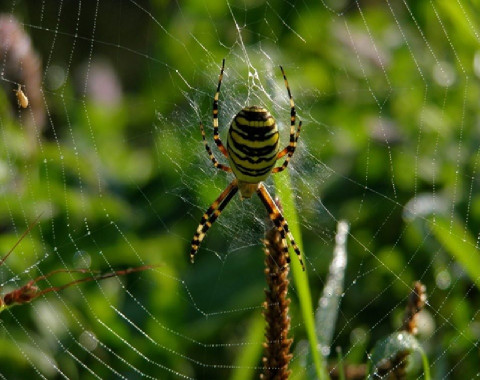
That isn’t a joke; they are quite helpful, especially the yellow garden spider (Argiope aurantia).
Sure, they’re scary and fast, and they have way too many legs. But in actuality, spiders eat many insects that might hurt us, our gardens, and our crops.
In this article, you’ll discover how crucial these spiders are in fighting insect pests [1]. You’ll also learn ways to attract them.
Benefits of Garden Spiders
They eat like crazy, and unlike your more or less typical four-year-old, they aren’t picky in the slightest.
If it hits their web, munch! Put simply, the more spiders you have around your garden, the healthier both you and your crops will be.
More spiders mean fewer pesky insects taking bites out of you and your plants.
How to Attract Spiders to Your Garden
The best way to attract Argiope aurantia and other beneficial spiders is by displaying attractive real estate. Yes, provide protection from the elements.
They are always on the lookout for cozy little hovels to call home, whether they are tall grasses, crops, bales of hay, or moist mulch.
Spiders will enjoy the added shelter cover. If you leave part of your garden untouched in winter, it may provide a cozy spot for them to stay warm. Then, they can start fresh in the spring when you’re ready.
Additionally, reduce pesticide use. Pesticides will eliminate all spiders, both good and bad.
Lifespan
Honestly, a garden spider’s lifespan depends on where it is located, as well as on its sex.
Typically, a male will often die after mating with a female, since he either gets eaten or his life is over.
The female will usually live long enough to produce an egg sac or two before dying herself once the heavy frost hits.
Of course, if the weather in your area is frequently mild, you might see the same female living for one or two years before passing away.
What do they eat?
The easier question is, what do they not eat?
If it flies, hops, or crawls and is unlucky enough to wander into the spider’s web, it’s a straight-up lunch, no questions asked.
So these spiders will eat flies, mosquitoes, moths, grasshoppers, beetles, and so on.
Yellow Spider Benefits
This one is a highly useful little buddy to keep around since they’re veritable arachnoid ninjas.
They’ll attack and eat virtually anything that moves, such as wasps, mosquitoes, butterflies, aphids, flies, and gnats.
This one is interesting too because, while most species hang in the center of their webs, these ones hide off to the side. They connect to the web by a thin strand of silk to ambush prey quickly when it hits.
The only problem is that they’ll also nosh on beneficial insects, like honeybees and butterflies, if they get the chance. But honestly, the pros far outweigh the cons.
Besides, this little fellow will have more than a choosy selection once the season gets into full swing.
Common Names
There are several names the black-and-yellow spider can go by. Just to name a few, we have the zigzag spider, yellow orb-weaver, writing spider, yellow-spotted spider, and corn spider.
Other common names include black and yellow argiope, golden garden spider, black spider with yellow spots, and golden orb-weaver.
Where Can You Find Them?
They have an incredibly extensive range to attribute to their unfussy dining habits.
You can find them from coast to coast across the expansive United States, all the way down through Mexico and clear into Central America.
Their favorite places are going to be verdant, sunny areas. These plants act as anchors for their trapping webs, so you will frequently find them in backyard gardens and small farm fields.
They’ll be hanging from their webs, waiting to swoop down on anything that might have wandered a bit too close.
Are They Poisonous?
You can relax; Argiope aurantia is not harmful.
They do have venom, but given their size and general diet, they use it mostly to take down insects.
So if you are bitten, it’s highly unlikely that anything will happen unless you are allergic to spider bites.
As a warning, while they’re not deadly, they will bite if provoked, so it’s best to leave them be.
Other Beneficial Spiders
Other spiders, like the garden orb weaver, grass spider, and jumping spider, can be a farmer’s best friend.
These little guys are just as hardy, voracious, and unfussy about their food.
Jumping ones are also considered among the most intelligent of the arthropods. They have even been documented as recognizing humans who frequent their territories.
There is also the Sac Spider. They don’t build webs and are most active during the night. They feed on destructive insects, including leafhoppers and caterpillars.
Takeaway
Not every spider is welcome, like the Black Widow, Brown Recluse, and Hobo spider. However, the Argiope aurantia and its friends, like jumpers, are just what you need.
They’ll rid your garden of the vast majority of the flying insect pests plaguing it. So if you can stand the sight of these little guys, then you can almost guarantee a healthy, thriving garden this year, free of many insect pests.



Add comment