

 Sasha Campbell
It’s that time of year again. No, we’re not talking about the holidays. We’re talking about the dreaded winter moth.
If you’re like many people, you’re seeking green methods to tackle the winter moth (Operophtera brumata). Well, you’re in luck. In this article, we’ll share some safe home remedies and natural products to deal with them.
Host Plants
There are several types of plants that winter moth caterpillars are drawn to, but the most common are oak, maple, and apple [1].
Other plants identified as attracting winter moths include white elm, birch, ash, blueberry, and cherry trees.
Identification
The winter moth is found in Europe and other areas [2]. Female moths lay their eggs on the branches of trees in late autumn.
The eggs hatch the following spring, and the caterpillars begin feeding on the leaves. In May or June, they pupate and emerge from the soil as adult moths in late November.
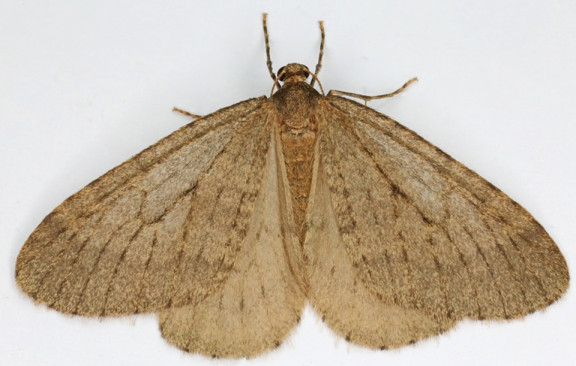
The adult male moths are brown to tan, with a wingspan of about 30 mm. The females are gray and flightless, with reduced wings.
After hatching, the caterpillars climb the tree trunk and begin feeding on tender new leaves. The caterpillars are very tiny (about the size of an eyelash) and are pale green with a light white vertical stripe running along each side of the body.
How to Get Rid of Winter Moth Naturally
1. Bacillus thuringiensis
Bacillus thuringiensis produces toxins that are deadly to moths but harmless to people and animals. You can find it in liquid or powder form at your local garden center or online.
2. Spinosad
Spinosad is effective against a number of caterpillars, including those of the winter moth.
It works by causing the caterpillar to stop eating and eventually die. Spinosad is available in liquid concentrate and can be found at most garden centers or online.
To use this natural insecticide, mix it according to the manufacturer’s directions and apply it to the affected area. It’s important to follow the label directions, as it can harm bees.
3. Horticultural Oil
Horticultural oil is a pest control product that suffocates the eggs and larvae of moths and other pests.
To use it, mix it with water as directed on the label. Then you will want to spray it on the trees and shrubs infested with the pests.
Make sure to spray in tree crevices and under tree bark, as that’s where the eggs are typically found. You’ll also want to spray the tree’s trunk and branches, as caterpillars can climb up and cause damage.
Horticultural oil is a safe and effective treatment for moth infestations, and you can use it yourself without calling a professional.
4. Natural Predators
There are several natural predators that prey on these pests.
One of the most common is the parasitic wasp. Some wasp species lay their eggs inside the caterpillar of a moth. Once the eggs hatch, the wasp larvae start eating the winter moth larvae from the inside out.
Another option is to introduce or encourage predators into your garden, like birds and ground beetles. These natural predators will help keep the snow moth population under control without you having to lift a finger.
5. Tree Banding
One of the most effective ways to prevent the caterpillars from causing damage is tree banding. This involves wrapping a sticky band around the tree trunk to prevent hatching caterpillars from climbing up.
You can buy bands for trees, or you can make your own by coating strips of cloth or paper with a sticky substance. However, this method won’t work if the moths are already high up in the tree.
This method also works great for controlling fall and spring cankerworms.
6. Soapy Water
Believe it or not, one of the cheapest ways to eliminate these pests is with soapy water. That’s right—the same stuff you use to wash your dishes can also be used to control winter moths.
Here’s what you need to do: make some soapy water insecticide, put it in small dishes, and then place the dishes outside near a light source. These make excellent moth traps.
Wherever the moths see the light, they will flock to it. They will then fall into the soapy water and suffocate.
7. Pick Off Caterpillars
You can also pick off winter moth caterpillars by hand. This is a bit tedious, but very effective.
You’ll need to be vigilant about checking your plants for caterpillars and removing them as soon as you see them. Make sure you get all of them.
You can also help control the population by removing egg masses from trees.
8. Monterey Take Down Spray
This product is a contact pyrethrin-based insecticide. It is very effective against eggs, larvae, and adults.
Moreover, Monterey Take Down is affordable, easy to use, and delivers results quickly.
Takeaway
These are a few organic and natural ways to deal with the winter moth, but it’s important to be patient and persistent. You may need to try a few different methods before you find one that works for you.
If you have a severe infestation, you may need to call in a professional. But in most cases, you can get rid of these pests with a little bit of effort and the right approach.



Add comment