

 Sasha Campbell
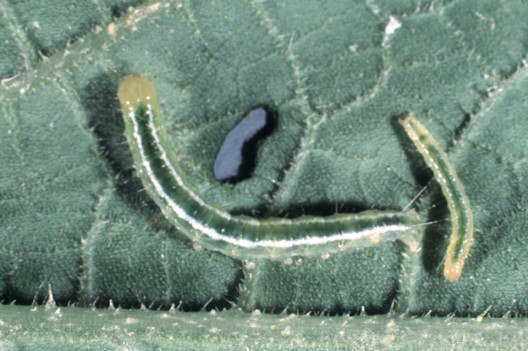
Have you noticed those little white or greenish worms munching away at your squash and/or watermelon vines? Yeah, melon worms can be a real nuisance once they infest your garden.
But don’t worry; there are some natural melonworm control methods that you can try. You’ll also be happy to know you can use most of these remedies on your own.
The key is to act fast before those worms take over your cucurbit garden.
Identification
Melon worms are common pests that feed on cucurbits like squash, cucumbers, melons, and cantaloupes.
These colorless caterpillars hatch from eggs laid by melonworm moths on the undersides of leaves and feed on foliage, vines, and fruit.
Damage
The melon worm moth lays its eggs on plants in the cucurbit family, like cucumbers, squash, pumpkins, and, of course, melons [1]. Once the eggs hatch, the larvae, known as melon worms, feed on the leaves and vines of these plants.
Cucumbers are a favorite target of melon worms. Summer and winter squash also provide a welcoming habitat for this pest. Zucchini, butternut, acorn, and spaghetti squash are all at risk of damage from melon worms.
Pumpkin vines and leaves are also ideal places for these worms to feed and grow. Finally, as their name suggests, melons like cantaloupe, honeydew, and watermelon are also prime targets for melon worms.
How to Get Rid of Melon Worms Naturally
Controlling melon worms on plants is critical to growing healthy crops. Below are some natural home remedies and organic methods you can try.
1. Row Covers
Row covers are light fabrics that help keep adult moths and other flying pests away from your plants.
Place row covers over hoops to protect watermelons and other host crops from pests. Moreover, you can find row covers at most garden centers or online, and they are affordable.
2. Plant Early
Planting squash, cucumbers, melons, or other potential target crops early in the growing season is one of the best ways to avoid melon worms.
With the right conditions and care, your crop will mature and be ready to harvest before melon worms become a major threat.
3. Trap Crops
Lure the melon worms away from your melons by planting trap crops nearby.
Two effective trap crops are squash and cucumber. The worms seem to prefer these over melons.
As the worms gather on the trap crops, you can easily remove them by hand. If cucumbers or squash are your main crops, then you can try planting another host crop nearby to attract these pests.
Using trap crops around your garden is an eco-friendly way to outsmart these pesky pests.
4. Spinosad
Spinosad is an organic pesticide that kills melon worms when they eat or come into contact with it.
This product provides an organic method to eliminate melon worms and keep your melons, cucumbers, and other cucurbits worm-free.
When used properly and consistently, it can be an effective remedy in an integrated pest management program.
5. Control Weeds
Controlling weeds around your melon patch is also important for your plants’ health. Weeds can harbor melon and cantaloupe pests that may attack their namesakes and other cucurbits.
Therefore, pull weeds regularly, especially when they are small. Be diligent about controlling weeds throughout the growing season.
6. Fruit Bagging
Another smart home remedy is to bag young fruits. As the fruits start to develop, cover them with mesh bags.
This prevents the adult moths from laying their eggs on the fruit’s surface.
Fruit bagging can help control melon worms in watermelons and other fruits. It’s an easy and organic method to try.
7. Neem Oil
Neem oil is commonly used as an organic pesticide for a wide range of pests on plants. You can find pure neem oil or neem oil concentrate at most garden centers and online.
Make a homemade pesticide for watermelon, squash, or other host plants. Just mix 2 tablespoons of pure neem oil with a teaspoon of liquid dish soap and a gallon of water.
Next, pour it into a spray bottle and coat the leaves and stems of your plants. In addition, spray it directly on the watermelon worms that you see.
8. Pick Them Off
Picking these green or white caterpillars off by hand is a cheap, organic way to control an infestation.
Check your plant’s vines and leaves at least twice a week for signs of these worms. As soon as you spot one, simply pluck it off and drop it into a container of soapy water.
This will kill the worms and prevent them from returning to the plant. But be diligent and thorough with your inspections.
Also, pick off any egg masses you find to break their lifecycle. While handpicking may seem tedious, it can make a big difference if done consistently and carefully.
9. Diatomaceous Earth (DE)
You can also apply diatomaceous earth to your plants. It will dehydrate and kill the caterpillars. Reapply after rain.
You can also make a DIY melon worm spray out of it. Just mix 1 tablespoon of DE into 1 quart of water.
Next, use it to spray your plants. It will work the same way after it dries.
10. Bacillus thuringiensis
Bacillus thuringiensis, also known as Bt, is toxic to certain insects, such as melon worms.
You can apply it right to your plants’ leaves, vines, and other spots where worms feed, as the package states.
11. Natural Predators
Natural predators, such as birds, ladybugs, and some parasitic wasps, help control melon worm populations.
Some birds feed on adult moths, eggs, and caterpillars. Ladybugs and parasitic wasps also feed on the small caterpillars.
The presence of these natural enemies will naturally reduce the number of melon worms and other common garden pests.
Takeaway
You don’t have to resort to harsh pesticides to eliminate melon worms. As you have read, there are plenty of natural remedies you can try in your own garden.
Give some of these natural methods a shot. The war against garden pests doesn’t have to be toxic.



Add comment