

 Andre Campbell
If you’ve been noticing small holes in the leaves of your elm trees, there’s a good chance you’re dealing with an infestation of elm leaf beetles.
These pests can quickly damage elm leaves and, when infestations occur repeatedly, may weaken trees over time.
Fortunately, several natural elm leaf beetle control methods can help reduce damage and protect your trees. Some are more effective than others, but all of them are worth a try.
But first, let us take a closer look at what elm leaf beetles are and why they’re such a problem.
Identification
Elm leaf beetles are leaf-chewing pests that feed on the leaves of elm trees. If you have an elm tree in an area where elm leaf beetles are common, you may eventually encounter these pests.
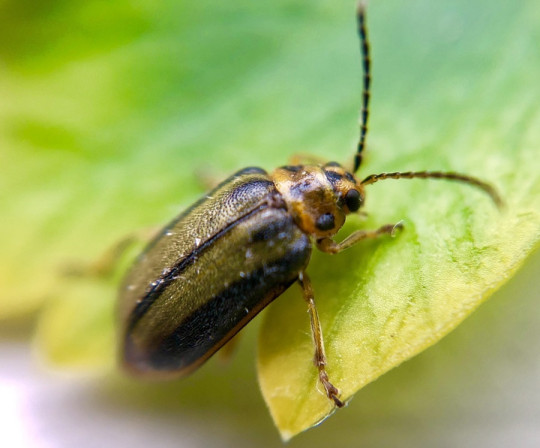
The easiest way to identify an adult elm leaf beetle is by its characteristic dark stripe along each side of its wing cover. It is also about ¼ inch long and yellow to olive-green in color [1].
If you’re not sure if that’s what they look like, it’s always a good idea to take a picture and send it to an expert for confirmation.
Elm Leaf Beetle Damage
The larvae skeletonize the leaf surface, causing leaves to turn brown and look lacy. Severely damaged leaves may eventually drop from the tree.
The adult beetles chew irregular holes through the leaves, giving them a shot-hole appearance [2].
How to Get Rid of Elm Leaf Beetle Naturally
If you’re seeing signs of elm beetle damage, it’s time to take action. Below are a few ways to do so organically.
1. Vacuuming
You can vacuum them up if they become a problem inside your home while seeking shelter. This is a tedious method, but it can help reduce their numbers indoors.
2. Remove Dead Branches
Although removing dead branches won’t directly control elm leaf beetles, it can improve overall tree health and help reduce the risk of other elm pests and diseases.
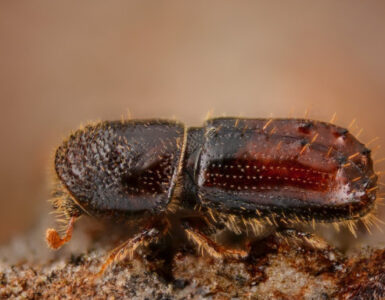
This is because these branches pose a risk of falling. Once fallen, they become habitats for bark beetle species that vector Dutch elm disease fungi [3].
So take a look at your tree and identify any drying or dead branches. Once you’ve identified them, remove them.
3. Destroy Egg Masses
Destroying the eggs will help control the population. Look for egg masses on the undersides of leaves and remove or crush them before they hatch.
The eggs are laid in clusters of about 5 to 25, arranged in double rows, and are usually bright yellow.
4. Natural Predators
There are also a few natural predators that can do the job for you.
Several beneficial insects may help reduce elm leaf beetle populations. These include lady beetles, lacewings, ground beetles, earwigs, and certain parasitic wasps.
You can attract them to your yard by planting flowers that they like, such as dill and yarrow.
5. Rake Up Fallen Leaves
Rake up the fallen leaves and dispose of them. This solution helps reduce areas where larvae can pupate, which may help limit future beetle populations.
6. Seal Cracks and Crevices
You can prevent an elm beetle infestation in your house by sealing any cracks or crevices. This home remedy will make it harder for them to get inside, and once they’re sealed out, they won’t be a nuisance.
So take a look around your house and see if there are any areas where the sealant has worn away. If there are, patch them up as soon as possible.
7. Spray Neem Oil
Neem oil is a natural insecticide that may help control young elm leaf beetle larvae. It works by disrupting the insects’ feeding and development, which can reduce their numbers over time.
Mix neem oil according to the label directions and spray it on the upper and lower surfaces of affected leaves. For best results, target young larvae before severe damage occurs.
Apply neem oil in the early morning or late evening to help protect beneficial insects and avoid spraying during the hottest part of the day.
8. Spinosad
Spinosad is effective against a wide range of pests, including elm leaf beetles, and it is relatively safe for humans and the environment.
You can buy it online. This is an excellent product to use as an elm leaf beetle spray.
Apply spinosad in the evening after bees have stopped foraging and follow all label directions.
9. Trunk Banding
Trunk banding can help reduce elm leaf beetle larvae as they migrate down the trunk to pupate.
What you do is wrap a band of sticky tape or tree wrap around the tree’s trunk, and this traps the larvae as they try to move down.
Check the bands regularly and replace them as needed to maintain their effectiveness.
10. Monterey Bug Buster-O
Another way to eliminate these pesky beetles is to use Monterey Bug Buster-O.
It’s an OMRI-listed pesticide made from pyrethrins. When used according to label directions, it can be an effective option for controlling elm leaf beetles.
This organic elm beetle treatment also works great for getting rid of tarnished plant bugs, cankerworms, whiteflies, millipedes, and other pests.
11. Apply Beneficial Nematodes
Beneficial nematodes may help reduce elm leaf beetle populations. They target larvae and pupae in protected areas around the base of trees.
These microscopic organisms occur naturally in soil and are safe for people, pets, and most beneficial insects.
Takeaway
Elm leaf beetles can be frustrating pests. However, you can keep their populations under control by regularly monitoring your trees, removing any egg masses you spot, encouraging beneficial insects, cleaning up fallen leaves, and using organic treatments when necessary.
Combining these methods can effectively manage elm leaf beetle populations. Early action is often the best way to prevent severe defoliation and maintain healthy elm trees.

 Sasha Campbell



thank you Andre. I so appreciate you sharing your knowledge.