

 Sasha Campbell
Try some natural ant-killer remedies before you buy expensive ant sprays or baits. These recipes are easy to make, inexpensive, and environmentally friendly.
Homemade Recipes to Kill Ants Outside and Inside
Below are DIY ant-killer recipes using common kitchen ingredients.
1. Essential Oil Spray
Some essential oils, especially clove and cinnamon oil, may kill ants on contact in high concentrations, though they are generally more effective as repellents.
Combine 1 tablespoon of rubbing alcohol, 15 drops each of orange, clove, citronella, and cinnamon oil, with 1/2 cup of water.
Shake well to combine all ingredients. Your essential oil ant-killer remedy is now ready.
2. Black Pepper Spray
Black pepper may act as a natural irritant that ants tend to avoid.
Combine two tablespoons of freshly ground black pepper with one cup of water.
Mix well, strain, then pour into a spray bottle. Spray wherever ants are seen.
This DIY spray can also work as an ant deterrent, as the strong smell will keep them at bay.
3. Vinegar and Water
Another simple DIY ant killer spray consists of equal parts white vinegar and water.
Mix equal parts white vinegar and water in a spray bottle. Vinegar’s strong scent disrupts ant trails and helps deter them.
Shake well to combine. Finally, spray it directly on ants and around areas where you see them entering, such as cracks and crevices in walls.
4. Peanut Butter and Boric Acid
Peanut butter is a natural bait for some ants because its oils and proteins attract them. Boric acid, a white powder, is toxic to these pests.
Therefore, mix two tablespoons of creamy peanut butter and ½ teaspoon of boric acid powder.
Stir well to thoroughly combine the peanut butter and boric acid. Finally, place small amounts on little bait trays (like small pieces of cardboard) where the ants are.
This combo is deadly to grease ants, not to sugar ants. However, keep boric acid away from children and pets.
5. Diatomaceous Earth Spray
This powder can also kill some ants. It also works against many other small, soft-bodied pests.
Just mix four tablespoons of diatomaceous earth with one gallon of water. Apply it directly to ant trails, entry points, and active ant areas.
Once the water dries, the diatomaceous earth damages the ants’ outer coating, causing dehydration.
6. Cornmeal and Boric Acid
Cornmeal and boric acid combo is a natural ant bait that workers may take back to the colony.
Combine 9 parts cornmeal with 1 part boric acid powder. Cornmeal attracts ants, and boric acid poisons them.
Therefore, place small piles near areas where you see ants. But keep boric acid mixtures away from children and pets, as they can be harmful if ingested.
7. Neem Oil Spray
Neem oil is an organic insecticide that repels and kills many insects, including ants.
It works against fire ants, red ants, leafcutter ants, and black ants. It is commonly used in vegetable gardens and outdoor areas when applied as directed.
Mix 5 ml of pure neem oil with 1 liter of water and 2 ml of liquid soap to make a DIY ant-repellent spray. The soap helps emulsify the oil, allowing it to mix with the water.
Spray the solution directly on the critters and their trails.
8. Borax and Sugar Trap
Another killer recipe is borax and sugar.
Mix 2 tablespoons of borax with 1/2 cup of sugar and 2 cups of warm water. Pour some of this borax-sugar mixture into a jar and place it in the problem areas.
This combo makes a simple homemade ant trap. The sugar attracts the ants, while the borax kills them.
Keep borax away from children and pets.
9. Baking Soda and Sugar
Some people use baking soda and sugar as a homemade ant bait, though results may vary.
Mix 1 part baking soda and 1 part confectioners’ sugar. Some believe the baking soda may help kill ants after ingestion.
Therefore, place small piles of this mixture around areas where you see ants. Worker ants may also carry some of the mixture back to the nest.
10. Hydrogen Peroxide, Mouthwash, and Dish Soap
Some homeowners report success using a mixture of hydrogen peroxide, mouthwash, and dish soap to kill ants on contact.
A commonly reported method is the following:
Mix the same amount of hydrogen peroxide and mouthwash, then add a bit of dish soap to a spray bottle. Do not add water.
Next, shake well and use it to spray for indoor ants. However, test on a small area first, as some mouthwashes may discolor certain surfaces.
Sweep up the dead ants and wipe your floor afterward. This solution will make your floor sticky.
11. Boiling Water
Boiling water is also an effective way to kill ants and destroy their colonies.
Bring a pot or kettle of water to a rolling boil.
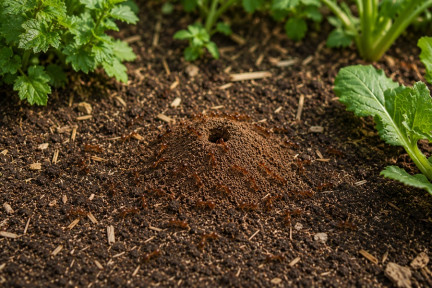
Next, carefully pour the hot water over the entrance of the ant hill outside. You can also pour it into any cracks from which the ants are coming.
The boiling water can kill many ants on contact and may damage parts of the colony, including larvae and nearby ants.
However, be extremely cautious when handling and pouring the boiling water, as it can cause severe burns.
Boiling water may significantly reduce or destroy small ant colonies, though larger nests may require repeated treatments.
12. Soap and Water
One of the simplest ways to get rid of ants organically is to use a solution of mild liquid soap and water.
Mix a few drops of mild liquid soap into a spray bottle filled with water. Shake well to combine.
Spray the soap solution directly onto the ants and entry points to kill them and eliminate the scent trail. The soapy water will suffocate the ants and wash away their scent so other ants can’t follow.
You may need to reapply a few times, but this cheap, homemade ant spray works and is safe for kids and pets.
This method is also excellent for garden areas where you want to keep ants away.
Takeaway
With these simple homemade sprays, baits, and repellents, you can naturally reduce ant problems indoors and outdoors without relying heavily on harsh chemicals.
You may need to try more than one method depending on the type of ants and the size of the infestation. These natural remedies may also require repeated applications.
Sanitation and sealing entry points are important long-term solutions as well.




Add comment