

 Sasha Campbell
Composting sounds like something you need a big backyard for, but that’s not true at all. You can compost right inside your home, even in a small apartment, without dealing with bad smells or annoying bugs.
Composting indoors helps cut food waste. It also makes rich soil amendments for your houseplants and supports a more sustainable lifestyle. The key is knowing how to do it the right way.
This is a beginner composting guide that you can follow.
What Is Indoor Composting?
It is the process of breaking down food scraps and organic waste inside your home instead of outdoors. Instead of relying on large compost piles, this method uses small containers or special bins that control moisture and airflow.
The goal is the same as outdoor composting: turning waste into nutrient-rich compost that helps plants grow.
When done properly, a well-balanced indoor compost pile should not smell rotten. And if it is properly maintained, it should not attract insects.
Perfect for Beginners
Composting indoors is easier to control. You don’t have to worry about the weather, animals, or large piles of waste. Everything happens in a small space where you can see and manage it daily.
It also encourages better composting habits because you are more aware of what you add to the bin. Plus, your indoor plants will love the finished compost.
Best Indoor Composting Methods for Small Spaces
There are several ways to compost indoors, and some are better for beginners than others.
Indoor Bins
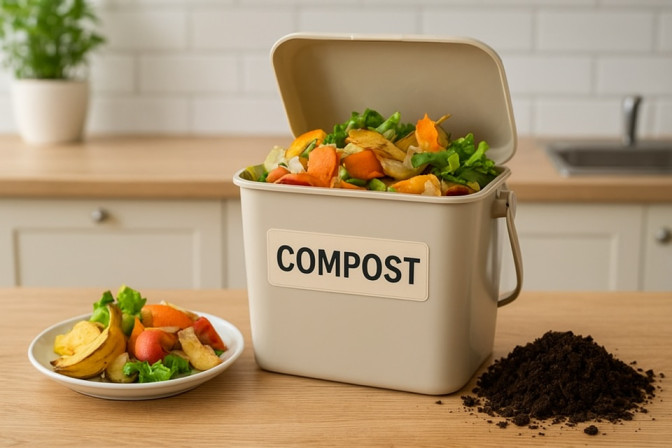
Countertop compost bins are popular because they’re compact and easy to use. Also, they usually come with filtered lids that trap odors.
Some indoor compost bins, like this one, are even dishwasher-safe and made from 100% plant-based materials.
Vermicomposting
Vermicomposting, which uses worms, is another great method. Worm bins are manageable and small, making them ideal for small spaces.
This aerobic method uses red wriggler worms to break down organic waste in a ventilated bin.
Moreover, you can build your own worm-powered bin, or you can purchase one like the Hungry Bin. You can also use a worm bag like this one.
Bokashi Composting
Bokashi composting is an anaerobic (oxygen-free) fermentation method that works well indoors.
It breaks down food fast, including cooked foods. This Japanese method also allows you to add meat, dairy, and other products.
The SCD All Seasons Organko Composting Kit is an excellent beginner-friendly composter for this method.
Choosing the right method depends on your comfort level and the amount of waste you produce.
What You Can and Cannot Compost Indoors
Fruit and vegetable scraps, coffee grounds, tea bags, crushed eggshells, and paper towels work well. These items break down easily and do not cause strong odors when balanced properly.
However, avoid adding meat, dairy, oily foods, and heavily seasoned leftovers unless you’re using a Bokashi system. These foods tend to attract pests and smell in traditional compost bins.
Cutting scraps into smaller pieces also helps them break down faster.
How to Prevent Smells in Compost
A well-maintained compost bin should smell earthy, not rotten. Smells usually mean the compost is too wet or needs more air [1].
To prevent odors, always add enough dry materials, such as shredded paper, cardboard, or coconut coir, to absorb moisture. These are often called “browns.”
Stirring or mixing the compost occasionally also helps improve airflow, which prevents bad smells from forming.
In addition, keeping the lid closed and using a bin with a filter also makes a big difference.
How to Keep Bugs Out of Your Compost Bin
Many insects are attracted to exposed food or excess moisture. Therefore, always bury fresh scraps under a layer of dry material.
Keep fruit scraps covered and avoid leaving the bin open for long periods. In addition, make sure the compost isn’t dripping wet, since moisture attracts gnats and flies [2, 3].
Regularly cleaning the lid and edges of the bin also helps.
How Long Indoor Compost Takes to Break Down
DIY indoor composting usually takes longer than outdoor composting, but it still works well. Depending on the method you use, compost can be ready in a few weeks to a few months.
Worm composting often produces usable compost in about two to three months. Bokashi composting is also quick, but the fermented material needs to finish breaking down in the soil.
How to Use Indoor Compost for Houseplants
Once your compost is dark, crumbly, and smells like soil, it’s ready to use. You can mix it into potting soil to improve texture and add nutrients.
A thin layer added to the top of the soil also works as a gentle fertilizer.
Because indoor compost is rich, it’s best to use it sparingly. Your plants will grow stronger and more resilient over time.
Common Indoor Composting Mistakes to Avoid
Beginners often make a few simple mistakes that can cause problems.
Adding too much food waste without enough dry material is one of the most common mistakes.
Another mistake is letting the compost sit without mixing it. Compost needs some airflow to stay healthy.
Using the wrong container can also cause issues. A good indoor compost bin should be breathable but not open.
In addition, not everything can be composted. It is important to note that oils, dairy, and meat can quickly produce odors. They also clog up the breakdown process.
Foil, plastic wrappers, or foil never decompose. By sticking to only vegetable scraps, eggshells, egg peels, and fruit peels, you can keep your compost clean and healthy.
Finally, composting too many food scraps too soon can lead to odors. Starting slowly and keeping things balanced makes all the difference.
Takeaway
Indoor composting is worth it, especially if you love houseplants or want to reduce waste. It also saves food scraps from ending up in landfills and turns them into something useful.
Moreover, it’s cleaner and easier than many people expect. Once you get the hang of it, it becomes part of your daily routine.
With the right setup, you can compost indoors without odors or bugs and enjoy the benefits year-round.


Add comment