

 Sasha Campbell
The sweet potato plant is easy to grow and can be a great addition to any home garden.
But just like any other plant, it needs supportive companion plants to help it thrive. That’s why it is crucial to select the right companions for your sweet potato patch.
Today, we will share some tips for selecting the best companions for your sweet potatoes so that you can get the most out of your harvest.
Good Companion Plants for Sweet Potatoes
Growing this crop is a great way to get a steady supply of delicious, nutritious treats.
Choosing plants that are good companions for your sweet potatoes can boost yields. It might also protect them from pests and diseases.
So what should you plant alongside your sweet potatoes? Here’s a list of vegetables, flowers, and herbs that will help sweet potatoes thrive:
- Garlic
- Yarrow
- Beans
- Onions
- Summer Savory
- Chives
- Parsnips
- Marigolds
- Sweet Alyssum
- Thyme
- Corn
- Dill
- Carrots
- Turnips
- Beets
- Spinach
- Basil
- Nasturtium
- Radishes
- Oregano
What Not to Plant Next to Sweet Potatoes
There are some plants that you should avoid planting with your sweet potato plants.
Here’s a list of bad companions for them:
- Pumpkins
- Eggplant
- Cantaloupes
- Sunflowers
- Okra
- Tomatoes
- Gourds
- Watermelons
- Squash
- Strawberries
- Peppers
How to Grow Sweet Potatoes
When planting sweet potatoes, choose a sunny spot with well-draining soil.
The plants grow from slips, not seeds. So, in essence, you are cultivating sweet potatoes from existing sweet potato plants.
Also, make sure you give them enough room to spread out. The plants also require soil with a pH of 5.8–6.0 [1].
Watering
Sweet potatoes need a consistent water supply—about 1 inch per week—during their growing season. Also, keep the soil moist; never allow it to dry out completely.
Mulching with organic materials, such as straw, can also help conserve soil moisture.
Fertilizer
You also need to ensure the soil has enough fertilizer for crop growth. Sweet potatoes require adequate nutrients for healthy growth.
They also need fertilizer that contains nitrogen, potassium, and phosphorus.
Nitrogen is necessary for good crop quality and high yields. If the nitrogen levels are too low, older leaves will start to yellow.
Potassium is also vital for sweet potato growth. Potassium helps plants absorb water and nutrients. So, ensure your fertilizer has enough potassium.
On the whole, root and tuber crops need phosphorus to survive. It is essential for producing healthy tubers.
As a result, a balanced 10-10-10 fertilizer will ensure your plants receive the right nutrients for optimal growth and health.
Garden Pests
Sweet potatoes can attract several garden pests. These include root maggots, wireworms, leafhoppers, Colorado potato beetles, and flea beetles.
Each pest feeds differently, so it is essential to understand its behavior to protect your crops.
Take steps now to prevent these pests from damaging your crops.
Plant Diseases
Common plant diseases that can affect sweet potatoes include root-knot nematodes, Fusarium wilt, black rot, potato scab, bacterial soft rot, early blight, and late blight [2].
To prevent these problems, practice good crop management. Use techniques like crop rotation and apply organic fungicides when necessary.
Harvesting
Sweet potatoes are usually ready for harvest three to four months after planting.
To tell if they’re ready, look at the vines and leaves. When they start to turn yellow, the sweet potatoes are ready for harvest.
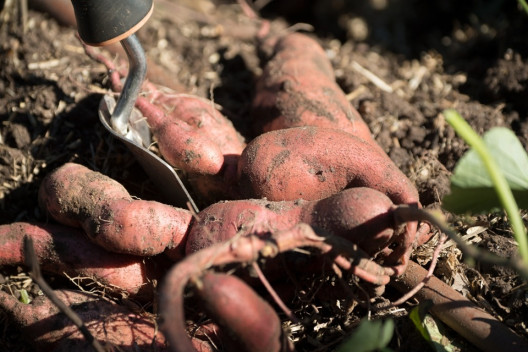
Use a garden fork or spade to loosen the soil around the roots, then carefully lift out the tubers, taking care not to bruise them.
Next, brush off any dirt that’s clinging to them. They’re now ready to eat or store.
How to Store
When you’re ready to harvest your sweet potatoes, you’ll want to take care when storing them.
Please put them in a cool, dark place, but never in the refrigerator. A root cellar or basement is best.
Also, if you’re not ready to use the potatoes right away, there are a few things you can do to keep them as fresh as possible.
- Please don’t wash them until you’re ready to use them. Wet sweet potatoes don’t store well, as the extra moisture can cause them to rot.
- Store unwashed sweet potatoes in a cool, dark place in well-ventilated, open containers. Paper bags work great!
- Check on them regularly and remove any soft or rotting ones.
- Store your sweet potatoes in a cool, dry place. With the right temperature and humidity, they can last for up to three months!
Where to Buy Seeds
This section is for your potato plant companions. You may want to find high-quality seeds; however, remember that sweet potatoes do not grow from seeds.
For other plants, reputable online stores like SeedsNow and Seed Needs sell organic vegetable and herb seeds. But be sure to read the labels for the estimated germination time and any other specific planting instructions.
Takeaway
When it comes to companion planting, sweet potatoes are not a one-size-fits-all crop. While some companions can help boost yields, others can harm your potato crop.
Therefore, when choosing a sweet potato neighbor, consider its purpose, plant size, impact on soil quality, and pest control.
Don’t forget to rotate your crop companion plants. Over time, the same combinations can impact your garden in various ways.





Add comment