

 Sasha Campbell
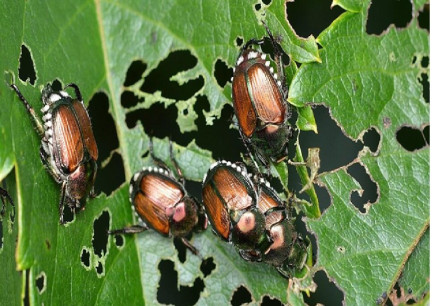
Japanese beetles are destructive garden pests that feed on more than 300 kinds of plants [1]. They often gather in groups and feed on leaves, flowers, and fruits.
Large numbers can cause heavy damage, although healthy, established plants can often tolerate some feeding.
Adult Japanese beetles often appear from late June through August, although the exact timing depends on the location and weather [2]. During this time, they feed on plant foliage and fruits, while their grubs mainly feed on grass roots.
Therefore, checking plants often and taking action when beetle numbers increase can help reduce damage.
How to Get Rid of Japanese Beetles Naturally
Below are some popular home remedies for Japanese beetles, along with natural and organic control methods that may help protect your plants.
Some methods work better than others, so it is best to use more than one approach when needed.
1. Pick Them Off
Some of the simplest home remedies for Japanese beetles do not require pesticides. Hand-picking and physically removing the beetles can work well when their numbers are low.
Removing beetles early may also help keep more beetles from gathering on the plant. Damaged leaves can give off odors that attract other Japanese beetles [3].
Pick them off early in the morning when they are cool and sluggish. Drop them into a container of soapy water.
2. Drop Cloth
A drop cloth is handy, especially in the early morning when the beetles are sluggish.
Spread a light-colored cloth or sheet under the affected plant. Gently shake the plant so the beetles fall onto the cloth.
Pick them up and drop them into soapy water.
3. Row Covers or Fine Netting
Row covers help prevent insect pests from accessing your crops.
Put the covers in place before Japanese beetles begin feeding on the plants. Use plastic hoops or wooden frames to support them. Secure the edges so Japanese beetles cannot get underneath.
Remove the covers when plants are flowering and need bees or other pollinators.
4. Neem Oil
Neem-based products may help deter Japanese beetles from feeding. However, they may not work well when large numbers of beetles are present.
Mix and apply the product according to the label. Some insecticides contain azadirachtin, a compound that comes from neem seeds. These products may also help control Japanese beetles.
Always check the label to make sure the product is approved for the plant and pest you want to treat.
5. Bacillus thuringiensis galleriae (Btg)
Bacillus thuringiensis galleriae, often called Btg, is a bacterial insecticide that can help control adult Japanese beetles [4].
After beetles eat treated plant material, they may stop feeding and eventually die.
Follow the product label carefully when applying Btg. Btg is considered low risk to bees and many other beneficial insects when used as directed.
6. Beneficial Nematodes
Beneficial nematodes, especially Heterorhabditis bacteriophora, can attack Japanese beetle grubs in the soil [5].
These tiny worms enter the grubs and release bacteria that kill them. Their effectiveness can vary.
Apply the nematodes according to the product instructions. Water the soil before and after application, and keep the soil moist as directed.
Avoid applying them during hot, sunny conditions.
7. Pyrethrin
Pyrethrin insecticides can kill Japanese beetles when the spray hits them directly.
Pyrethrin comes from chrysanthemum flowers, but that does not mean it is harmless to insects.
It can harm bees and other beneficial insects. Do not spray open flowers or apply pyrethrin when bees and other pollinators are visiting plants.
Always follow the product label.
8. Target Grubs at the Right Time
Japanese beetle grubs live in the soil and feed mainly on grass roots. If you need to control them, timing is important.
Young grubs are usually easier to control than older, larger grubs. The best time to treat them depends on your location and the control method you use [6].
Beneficial nematodes and other grub-control products work best when applied at the correct stage of the grub’s life cycle. Check with your local Extension office for the best treatment time in your area.
Always follow the product label when using any grub-control product.
Important: Killing grubs in your lawn will not necessarily stop adult Japanese beetles from visiting your garden. Adult beetles can fly in from other areas.
9. Keep Plants Healthy
Keeping plants healthy will not stop Japanese beetles from feeding, but healthy plants can often recover from insect damage better than stressed plants.
Give plants the water and nutrients they need, but avoid using too much fertilizer. Too much fertilizer can harm plants or cause weak, unwanted growth.
Check your plants often during Japanese beetle season. Finding and removing beetles early can help reduce feeding damage.
10. Avoid Overwatering the Lawn
Japanese beetles prefer moist soil for laying eggs [7]. Their eggs and very young grubs need enough soil moisture to survive.
If your lawn can handle it, avoid unnecessary watering during the main egg-laying and hatching period. However, do not let the lawn become badly damaged by drought.
11. Chickens and Birds
Chickens and some wild birds may eat Japanese beetles or grubs when they find them. However, these predators should not be expected to control a large infestation.
Supervise chickens around vegetable gardens because they may scratch seedlings and soil.
12. Parasitic Wasps
Some parasitic wasps attack Japanese beetle grubs. One example is the spring Tiphia wasp (Tiphia vernalis).
The female wasp finds Japanese beetle grubs in the soil and lays an egg on them. The developing wasp larva feeds on the grub.
These wasps may help reduce some grubs, but they should not be expected to control a large Japanese beetle population by themselves.
13. Geraniums May Affect Japanese Beetles
Japanese beetles may feed on geranium blossoms. However, research has shown that Japanese beetles may become temporarily paralyzed after feeding on certain geranium species [8].
While temporarily paralyzed, the beetles may be more vulnerable to predators. This effect is interesting, but geraniums should not be relied on to control Japanese beetles.
14. Milky Spore
Milky spore is a bacterium that infects Japanese beetle grubs. You may see it sold as a natural grub-control product.
However, university research has not shown reliable control from commercial milky spore treatments. Even where the bacterium becomes established, it may infect only a small percentage of grubs.
For this reason, do not depend on milky spore as your main Japanese beetle control method.
15. Try Repellent Plants With Caution
Some gardeners plant strongly scented herbs and flowers near their gardens.
Marigolds, nasturtiums, chives, tansy, catnip, and rue are sometimes suggested as plants that Japanese beetles may avoid. However, there is not strong evidence that planting them will protect nearby plants.
Grow them if you enjoy them or want their other garden benefits, but do not depend on them for Japanese beetle control.
16. Garlic Spray
Garlic spray is a popular home remedy for Japanese beetles, but there is little evidence that it can control a serious infestation.
Homemade sprays can also burn or damage some plants. If you try one, test it on a few leaves first. Wait a day or two and check for damage before spraying the whole plant.
Do not spray homemade mixtures on open flowers when bees and other pollinators are present.
17. Remove Overripe and Fallen Fruit
Japanese beetles feed on many types of fruit. Remove overripe fruit from plants and pick up fallen fruit from the ground.
This will not control a large infestation, but it removes an extra food source from your garden.
What About Japanese Beetle Traps?
Japanese beetle traps may catch many beetles, but they can also attract more Japanese beetles to the area.
Some of the beetles attracted to the area may land on nearby plants instead of entering the trap. This can lead to more plant damage.
For this reason, beetle traps are usually not recommended for protecting home gardens.
See also: How to Control Black Beetles Naturally.
Takeaway
Japanese beetles can damage leaves, flowers, and fruits when large numbers gather on plants. However, healthy, established plants can often handle some feeding.
Check your garden often during Japanese beetle season. Simple home remedies, such as hand-picking beetles and dropping them into soapy water, may be enough when beetle numbers are low.
For larger problems, you may need to combine several control methods. If you use a biological or organic pesticide, choose one labeled for Japanese beetles and follow the directions carefully.
Also remember that controlling grubs in your lawn does not guarantee that adult beetles will stay away. Adult Japanese beetles can fly in from surrounding areas.




Add comment