

 Sasha Campbell
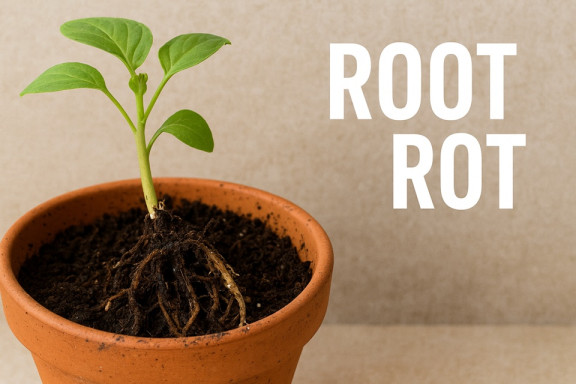
Root rot is one of the most common issues that indoor gardeners face.
Root rot can happen any time of year. However, it most often occurs during winter, when houseplants stay wet longer [1].
The good news is that you can save most plants if you catch this issue early. Let’s take a closer look at how you can naturally control or fix root rot in indoor plants.
Identification
What is root rot, you may ask? Well, root rot is a plant disease that damages the roots, usually because they stay too wet for too long.
One day, your plant looks a little droopy, and the next day, the leaves are yellowing and wilting.
Healthy roots are firm and able to take up water and nutrients. However, when the soil holds too much moisture, fungi and bacteria start to attack the roots [2].
As the roots die, the plant can’t get what it needs, so it begins to look sickly above ground. If the problem is not fixed, the whole plant can collapse.
This is why catching root rot early is so important.
Nearly any houseplant can suffer from root rot. However, some are more prone to it because of their growth habits and sensitivity to wet soil.
Succulents and cacti are especially vulnerable. Since their roots are adapted to dry environments, they can decay when exposed to moisture for too long.
Plants such as pothos, philodendrons, peace lilies, spider plants, and snake plants can be susceptible to root rot. This is common when they are in heavy soil or waterlogged pots.
Indoor-grown herbs, such as basil, mint, and rosemary, can also be affected.
Tropical plants, including calatheas and alocasias, are quite sensitive as well. They thrive on moisture but also need well-drained soil.
Look for soft stems, a foul smell from the pot, or leaves that yellow no matter how much light the plant gets. These signs often point to root rot.
How to Control and Treat Root Rot Naturally
Below are some home remedies and natural solutions for treating root rot in potted plants.
1. Provide Sufficient Drainage
Healthy roots rely on oxygen. When soil stays soggy, pockets of air disappear, depriving the roots of the oxygen they need to survive [3].
That is why providing proper drainage is essential. Therefore, make sure your pot has drainage holes at the bottom so excess water can escape freely.
If your pot does not have any, you can carefully drill holes or switch to a different container.
2. Do Not Put Rocks or Gravel at the Bottom of The Pot
Many people were told to place rocks or gravel at the bottom of a pot to improve drainage. However, this old gardening myth can have the opposite effect.
Instead of helping, gravel can block the drainage holes. This keeps the soil wetter for longer, increasing the risk of root rot.
3. Diluted Hydrogen Peroxide
Though not a cure, a diluted hydrogen peroxide solution is an effective DIY root rot treatment. It helps kill harmful fungi and bacteria responsible for this plant disease.
To use it safely, mix one part 3% hydrogen peroxide with two parts water. After repotting your plant into fresh, sterile soil, spray the roots with the diluted peroxide mixture.
This solution also works well for treating damping-off.
4. Choose the Right Potting Mix
Plants need a balance of moisture retention and drainage. If the soil stays wet for too long, rot becomes almost inevitable.
For most houseplants, loose, airy, high-quality mixes work best. They allow enough water to soak in while still letting air reach the roots.
A good potting mix should feel light in your hands and crumble easily. Heavy, compacted soil traps too much moisture.
So, it is always better to start with a mix designed for the type of plant you are growing rather than using whatever soil happens to be available.
Tank’s Pro Potting Mix is a good option for vegetables and herbs.
5. Prune Your Plants
When a plant is struggling, it cannot support as many leaves or stems. Therefore, removing yellowing or dying leaves helps the plant use its resources better.
6. Don’t Add Too Much Fertilizer
Fertilizer can be tempting when your plant looks weak. However, over-fertilizing can add too much salt to the soil, which can burn or further weaken the plant.
7. Promote Good Airflow
When it comes to houseplants, airflow matters more than most people realize. Stagnant indoor air keeps soil damp and encourages fungal growth.
Placing your plants in an area with natural airflow can help the soil dry properly between waterings.
8. Do Not Overwater
Overwatering is the most common cause of root rot. Many people water on a schedule, but plants don’t always need moisture at the same rate.
Soil type, temperature, humidity, and sunlight all affect how quickly water evaporates.
Therefore, water only when the top few inches of soil feel dry. For succulents and cacti, allow the soil to dry almost completely before watering again.
9. Repot Your Plant
Repotting is one of the most important steps in saving a plant from root rot. However, do not reuse potting mix from your houseplants.
Once rot begins, the pathogen responsible persists in the soil. Therefore, reusing the same potting mix will only reinfect the plant. This is why it’s critical to discard all the old soil.
Keeping the old soil for other plants is not a good idea either, because the infection can spread. The safest approach is always to throw the used mix away and start over.
However, before repotting, dip the remaining roots in the diluted hydrogen peroxide solution.
10. Use Pasteurized Commercial Potting Mix
Garden soil may contain pests, bacteria, fungi, and other pathogens that indoor plants are not equipped to handle. Additionally, using it in pots almost always leads to compaction and disease problems, including root rot.
Instead, choose pasteurized commercial potting mixes made specifically for container plants. These mixes are sterilized so they do not introduce harmful organisms into your home.
11. Disinfect Tools and Clay Pots
Whenever you treat a plant with root rot, disinfecting your tools is essential. Scissors, knives, pruners, and other tools can carry fungal spores from one plant to another.
Therefore, clean your tools with products like rubbing alcohol or a 10% bleach solution. Clay pots should also be cleaned thoroughly. You can use hot, soapy water for disinfecting pots.
12. Arber Bio Fungicide
Arber Bio Fungicide is another effective and natural option for treating and preventing root rot in houseplants. This organic product uses beneficial bacteria that can help control a broad range of fungal and bacterial diseases.
To use it, mix the recommended amount with water and use it accordingly.
Takeaway
Once you understand what causes root rot and how to treat it, you’ll be able to save your plants and prevent the same issues from happening again.
Natural remedies and methods absolutely work. Try the homemade root rot spray with hydrogen peroxide, or any other remedy you see fit.
With consistent care and attention, you can stop root rot.



Add comment