

 Sasha Campbell
If you’re planning on adding onions to your vegetable garden, that’s a good idea. Many beginner gardeners find them easy to grow.
Onions take 90 to 100 days to mature when planted from seed.
In most climates, the best time to plant them is in early spring to mid-spring. For those living in warmer climates, autumn is a good time to plant.
Below is a basic guide on how to grow onions at home:
How to Grow Onions from Seed
Start the seeds indoors in a container with rich compost or potting soil. However, it’s best to start them 8 to 10 weeks before you plan to transplant them outdoors into the garden.
Soak the seeds first before planting for better germination. Also, follow the packaging details, as instructions may vary by climate and onion variety.
Keep the soil moist and place the container in a warm area until the seeds sprout. Once they sprout, place the container in a cool, well-lit area.
Transplant the seedlings when they are mature enough.
Growing From Scraps
It is also possible to grow onions from scraps. In fact, onions are one of the easiest vegetables to grow from scraps [2].
- Cut off the root end and use toothpicks or other materials that can hold the scraps in place over a cup or bowl.
- Next, fill the dish, jar, or container with water and suspend just the root end in the water.
- Soon you’ll start to see tiny sprouts coming out of the top and root-like tentacles from the bottom.
- Afterward, place the sprouted scrap in the ground or a pot, covering it until just the sprouts are above the soil line.
- Finally, water, fertilize, and cultivate as you would with an onion that is grown from seed or set.
Another source says to regrow onions from scraps; just cut off the root end and plant it directly in moist soil in a sunny location.
Planting Onion Sets
Onion sets are miniature bulbs that, once put into the soil, will develop into full-size bulbs after 3 to 4 months.
These are a bit more robust and grow much faster than seeds. Plant approximately 4 inches apart in rows 12 to 18 inches apart.
Also, do not bury them more than an inch deep in the soil. For best results, soak the sets in compost tea for 15 minutes before planting.
Additionally, when picking up bulbs at a nursery, check that they are dry (typically sold in mesh bags) and firm.
Spacing
Spacing will depend on whether you are planting onions from seedlings or sets.
When transplanting, space the seedlings about 6 inches apart. Closer spacing will produce smaller bulbs. The rows should also be about 12 inches apart.
When doing sets, plant them about 2 to 3 inches apart. Also, add straw mulch between sets and in between the rows. Allow for 12 to 15 inches of spacing between rows.
How Deep to Plant?
Sow seeds a quarter-inch deep in the soil. If planting from sets, place them approximately 1 inch deep in the soil so they can take root.
Remember, the type of onion will also determine how deep you’ll plant it. It is crucial to know your climate and onion variety to fully understand their growing needs.
Watering
For onion plants to produce high yields, they need adequate water. Therefore, provide about an inch of water per week.
Also, it is best to utilize mulch around the plants, as it will help keep the soil moist and weed-free.
Fertilizer Requirements
To flourish, onions require rich, well-drained, fertile soil.
They also require adequate nitrogen for proper growth and development [1]. Therefore, apply a nitrogen-based fertilizer three weeks before planting and then again three weeks after.
Phosphorus and potassium are nutrients they’ll also need, especially in the early stages. Additionally, spread some compost among the plants and rake it into the soil.
Growing in Containers
You can grow onions in shallow containers at least 8 inches deep, either from sets or seeds.
- Fill the container about halfway with soil, and keep it watered but well-drained once planted.
- Add rich compost until the bulbs appear.
- The bulb should remain at least an inch below the soil, and if exposed, cover it.
- Additionally, cut back the leaves to help the plant focus more on bulb development.
Onion Companion Plants
Anything in the cabbage family makes a great companion plant for onions.
Onions also help deter aphids, Japanese beetles, carrot flies, and rabbits, so any crop that these pests enjoy can be planted with onions.
Lettuce and carrots are also good options. They have very different root systems that won’t compete with onions for the same soil resources. Tomatoes, lettuce, and strawberries are other great companions for onions.
Strawberries are also good companions. However, avoid all varieties of peas and beans, as they do not grow well near onions.
Harvesting
How do you know when onions are ready? Firstly, the top green leaves that start to wilt are an indication that they are near harvesting.
The bulbs will continue to mature as the leaves start to lose their color. However, if any of the plants have flowers on the stalks, they should be harvested immediately.
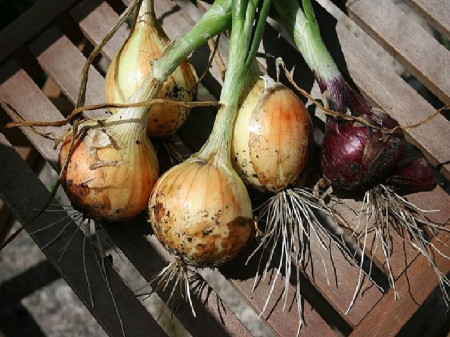
When harvesting, pull on the tops to safely remove the whole plant from the soil. Next, shake the dirt off around the bulbs.
Finally, let the bulbs sit in the garden for 1 to 2 days to allow them to dry naturally.
Pests and Diseases
- The onion fly is one of the most prolific pests that affects the allium family. They lay eggs, and the maggots hatch and feed on the seedlings. This fly resembles the housefly.
- The lesser bulb fly looks similar but is smaller. Once infected, the plants must be dug up and destroyed.
- Thrips are another insect that lays eggs on the leaves and then sucks the plant sap.
There may also be many diseases caused by uncontrolled watering, leading to lesions and rot. Onion plant diseases include soft rot, purple blotch, damping off, downy mildew, and onion smut.
Storing
Store onions in a dry, cool place. If they are too moist or warm, resprouting can occur.
Mesh bags, bushel baskets, or cardboard boxes with holes provide the best short-term storage to keep them dry and cool.
However, keep in mind that onions will only last about 7 to 10 days before thoroughly drying out or resprouting, even under the best conditions.
See also: How to Plant Garlic: A Basic Growing Guide.
Takeaway
Planting onions in your garden can be a rewarding venture. Whether you start with seeds or sets, various factors will determine how well your harvest turns out.




Add comment