

 Sasha Campbell
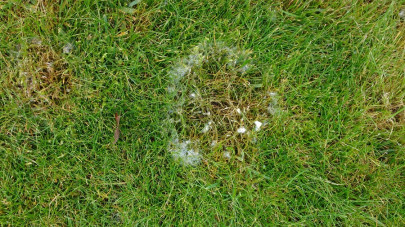
Ever notice those strange, orange-brown patches of dead grass on your lawn in autumn and winter? Chances are you’ve got Fusarium patch disease.
Don’t worry, you’re not alone. This pesky fungal infection attacks lawns everywhere, leaving unsightly dead spots.
The good news is that, with some simple natural treatments, you can eliminate Fusarium patches and boost your lawn’s health.
Identification
Fusarium patch disease, also known as pink snow mold, is caused by the fungus Microdochium nivale [1]. This fungus attacks grass blades, turning them yellow or reddish-brown.
As the disease progresses, you’ll notice roughly circular patches of discolored grass in your lawn, ranging from 1 to 6 inches in diameter.
Affected leaves may also appear water-soaked. This disease usually appears in late fall or early winter when the weather is cool and damp.
How to Get Rid of Fusarium Patch Disease Naturally
With simple cultural practices and natural treatments, you can restore your lawn to health and keep Fusarium patch at bay.
1. Avoid Fertilizers that are Too High in Nitrogen
Avoid using fertilizers that are high in nitrogen. Too much nitrogen will encourage lush, green growth that is more susceptible to disease.
Instead, use a fertilizer with more potassium during the growing season. You can also use organic fertilizers, such as compost tea, which helps protect your lawn from diseases.
2. Trim Overhead Tree Branches Regularly
One of the simplest ways to help prevent Fusarium patch disease is to regularly trim any overhead tree branches.
Trees that shade your lawn, especially early in the morning when dew is present, can create damp conditions. These moist areas are ideal for fungi to thrive.
Trimming overhanging branches improves air circulation and lets more sunlight reach your lawn.
More sun and airflow mean leaves and grass blades dry faster. This makes the environment less hospitable for the Fusarium fungus.
3. Carry Out Aeration and Scarifying of the Lawn
Aerating your lawn by punching small holes in the soil improves the movement of air, water, and nutrients to the roots.
Scarifying uses a spring-tine rake, power rake, or dethatching machine. It removes dead grass, moss, and debris from your lawn’s surface. This opens the lawn canopy, allowing water, air, and nutrients to reach the soil more effectively.
Aerating and scarifying are simple, natural techniques to improve your lawn’s health and combat disease. When used together, they can have a dramatic impact on the vibrancy and resilience of your grass.
4. Baking Soda
Baking soda has helped many homeowners tackle fungal disease issues, including lawn diseases. Therefore, I recommend giving it a try as a DIY treatment for Fusarium patch disease on your lawn.
To treat Fusarium patch disease with baking soda, mix 4 tablespoons with 1 gallon of water.
Apply this homemade Fusarium lawn treatment to your lawn, golf greens, and other areas. Spray it, especially where you see the distinctive yellow or brown patches.
Spray it on with a pump sprayer or a sprinkling can, thoroughly coating the grass blades.
5. Avoid Walking on or Mowing the Lawn
Avoid walking on or mowing the lawn at all costs, if possible. This can spread the fungus to healthy areas of your landscape.
Mowing the lawn too short can also promote the spread of Fusarium patch fungus. Raise the blade on your mower to cut the grass a bit longer, around 2 to 3 inches.
Longer grass blades will shade the soil better and reduce moisture on the leaf surface, creating an environment less favorable to fungal diseases.
Additionally, when you mow the lawn, be sure to clean your mower and tools thoroughly. This is to ensure that you remove any grass clippings.
Grass clippings left on the mower or tools can harbor fungus, leading to reinfection the next time you mow.
6. Vinegar
Another product with antifungal properties that you can try is vinegar. Vinegar is great at killing fungi, including those that affect lawns.
To treat infected areas of your lawn, mix equal parts white vinegar and water. This makes a homemade Fusarium patch disease spray.
Next, spray the solution directly onto the patches of grass. The acid in vinegar can help eliminate the Fusarium fungus.
The downside is that vinegar can potentially damage your grass. So be sure to use this home remedy only on the affected patches of your turfgrass.
7. Captain Jack’s Lawnweed Brew
Captain Jack’s Lawnweed Brew is an herbicide that works against moss and certain weeds. It also works against certain plant diseases. This includes snow mold, dollar spot, and rust.
It will not kill your lawn or grass, only weeds and the target disease(s). Just follow the directions carefully for the best effect.
8. ZeroTol HC
One of the most effective biological fungicides for eliminating lawn fungus is ZeroTol HC.
This broad-spectrum bactericide and fungicide contains hydrogen peroxide and another ingredient. Together, they help to effectively control Fusarium patch.
Using a combination of cultural practices along with this organic product can help prevent this issue from returning.
This Fusarium patch disease treatment is great for both preventing and curing the disease. It helps control the issue in an environmentally friendly way.
Takeaway
So there you have it: some natural ways to tackle Fusarium patch disease in your lawn without having to resort to harsh chemicals. It may take some persistence to get your lawn back to full health using natural methods, but the rewards are well worth it.




Add comment