


 Sasha Campbell
Creeping buttercup may look cheerful with its glossy yellow flowers, but this plant can quickly take over lawns and garden beds.
Known for spreading by creeping runners, creeping buttercup can choke out grass and weaken garden plants. All parts of the plant are also toxic to livestock [1].
Fortunately, you don’t need harsh chemical herbicides to control it. You can reduce and even eliminate creeping buttercup with patience and the right natural methods.
Below is a complete guide to getting rid of creeping buttercup naturally and preventing it from returning.
Identification
Creeping buttercup (Ranunculus repens) is a low-growing perennial weed [2]. It is known for its glossy yellow flowers and its spreading stems, called stolons.
These runners grow along the soil surface and form new roots wherever they touch the ground. This ability allows the plant to spread rapidly and create dense mats.
Creeping buttercup thrives in moist, compacted soil and areas with poor drainage.
This weed may look appealing at first. However, it aggressively competes for nutrients, sunlight, and space. This often leads to it crowding out grass and ornamental plants.
How to Get Rid of Creeping Buttercup Naturally
Below are some natural remedies for controlling this persistent weed.
1. Improve Drainage
One of the best natural solutions is to improve drainage. This is important because creeping buttercup prefers consistently wet soil.
Areas that stay soggy after rainfall create ideal growing conditions for this weed.
Loosening compacted soil allows water to move more freely through the ground.
Adding compost or other organic matter helps improve soil structure. This change allows excess moisture to drain away more easily.
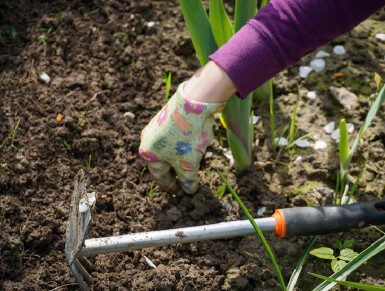
2. Hand Pulling the Correct Way
Hand pulling works best when done carefully rather than quickly.
The ideal time to remove creeping buttercup is after rain or watering, when the soil is soft, and the roots are easier to remove intact.
Additionally, taking time to remove the entire root system prevents regrowth. Pulled plants should also be discarded rather than composted because runners may re-root if left in moist conditions.
3. Smother with Cardboard and Mulch
First, cut down the plants.
Then, cover the soil with cardboard or thick layers of newspaper. This helps block sunlight and stops photosynthesis.
Adding several inches of mulch, such as straw, bark chips, or shredded leaves, on top also helps. The lack of light kills the plants beneath.
4. Strengthen Your Lawn
Healthy lawns are one of the best long-term defenses against creeping buttercups. Thin or weak grass allows runners to spread easily, while dense turf shades the soil and limits weed establishment.
5. Bonide Captain Jack’s Lawnweed Brew
Some gardeners opt for natural, lawn-safe weed treatments in addition to manual and cultural methods. They appreciate these treatments for effectively managing weeds while keeping their lawns safe.
One option is Bonide Captain Jack’s Lawnweed Brew, a selective herbicide that kills broadleaf weeds without harming lawn grass when used correctly.
This product kills weeds down to the roots. It works well on broadleaf weeds, like creeping buttercup.
Another advantage is that treated areas are typically safe for people and pets once the spray has dried. This makes it suitable for home landscapes.
For best results, it should be applied directly to actively growing weeds. Like most natural solutions, repeat applications may be necessary.
6. Vinegar
Household vinegar can also serve as a natural spot treatment for weeds, including creeping buttercup. It is ideal for those growing in pathways, driveways, or cracks where other plants are not desired.
Vinegar can harm any plant it comes into contact with. So, apply it carefully to protect nearby plants.
7. Improve Soil Fertility
Creeping buttercup often appears in soil that is imbalanced or nutrient-deficient. Therefore, improving fertility encourages desirable plants to grow more vigorously and outcompete weeds.
Adding compost introduces beneficial microbes and organic matter, improving soil texture and nutrient availability.
Aged manure and worm castings can also provide slow-release nutrients that support steady plant growth.
8. Boiling Water
Boiling water also provides a simple, chemical-free option for isolated patches.
Carefully pouring hot water onto the crown of the plant damages tissues and roots. This technique works best between paving stones or along edges where weeds grow individually.
Because it can also affect nearby plants and soil organisms, it should be used selectively.
Prevent Creeping Buttercup from Returning
Long-term control depends on prevention. Avoid compacting wet soil by limiting foot traffic during rainy periods.
Regular mulching suppresses new seedlings. Also, balanced watering habits prevent overly damp conditions that favor buttercup growth.
Removing young plants before they flower also reduces seed production and future infestations.
Common Mistakes to Avoid
Many gardeners unintentionally encourage creeping buttercup through routine habits.
Pulling weeds without removing runners spreads the plant, while mowing grass too short weakens lawns and exposes soil. Overwatering and ignoring drainage problems also create ideal conditions for regrowth.
Correcting these issues greatly improves natural control success.
Takeaway
You can get rid of creeping buttercup naturally. To do this, focus on improving soil health and correcting the conditions that support it.
Hand removal is important. Better drainage helps, too.
Smothering techniques and natural treatments also work well together. This mix leads to lasting results.




Add comment