

 Sasha Campbell
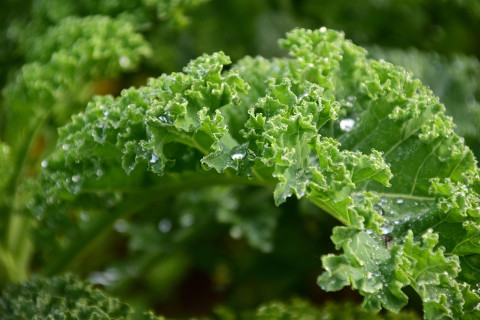
One of the easiest vegetables to grow is kale. Moreover, it has been getting a lot of attention in recent years.
It is believed that kale can significantly improve overall health due to its health benefits [1]. Not to mention, it is delicious and easy to prepare.
Read on to learn how to grow kale from seeds or seedlings.
Growing Kale
Since you’re reading this article, you likely want to know how to plant your own kale so you always have a consistent supply. Fortunately, it is pretty easy to cultivate.
Prepare the Growing Space
You’ll need a little bit of space in a garden bed or somewhere in your backyard.
If you don’t have yard space, a sturdy container (at least 12 inches in diameter) will also suffice. You will want to plan it so that it produces before the full heat of summer hits.
Also, identify where you will plant it. At the very least, kale plants will need partial sun (and full sun if you live in a cooler climate) to thrive.
Moreover, when growing kale in the garden, consider planting some good kale companion plants near it. However, be sure to keep it away from beans, strawberries, or tomatoes, as those are bad companions.
A mature plant will reach about 2 feet tall and spread to as much as 3 feet wide. Therefore, make sure you plant it in a location with ample room to grow.
The Planting Process
Kale works great for fall and winter harvests. Start your kale seeds indoors about 3 months before the fall frost.
Transplant the seedlings in the garden when there is no longer a risk of freezing at night. Also, seedlings should have 3 to 4 true leaves before transplanting.
If you opt to start seeds indoors and then transplant, your plants should be ready for harvest about 30 to 40 days after transplanting. However, if you plant seeds directly in the ground, expect mature plants in 55 to 75 days.
Kale does not enjoy the heat. Therefore, it is best to avoid planting the seeds or seedlings in the heat of summer.
Watering and Fertilizing
Ensure the plants are well-watered and the soil is evenly moist. Therefore, provide 1 to 1.5 inches of water per week.
Covering the ground with mulch can also help retain water and maintain a healthy root temperature.
Additionally, fertilize the soil every 2 weeks with a water-soluble fertilizer if you’re growing in a container.
Kale plants require fertilizer rich in nitrogen, potassium, and phosphorus. A fish and seaweed emulsion is rich in these nutrients.
Harvesting
You will know that it is time to harvest when the leaves are about the size of an average adult’s hand.
To harvest kale so it keeps growing, simply pick the leaves straight off the stem, starting at the outer leaves and working inward.
However, leave a few of the smaller inner leaves so that you will have another crop to harvest in about a week or so. Also, while harvesting, remove any dead or bug-eaten leaves and toss them in your compost.
Health Benefits of Kale
- Like many leafy green vegetables, kale is low in calories and fat but rich in fiber, iron, vitamin K, and other vitamins and minerals [2].
- In fact, it even has more iron per calorie than a serving of beef.
- Moreover, the vitamin K, carotenoids, and flavonoids in this vegetable make it a powerful cancer fighter.
- Omega-3 fatty acids are also found in kale. This helps reduce inflammation in the body.
- Kale is also rich in vitamins A and C. Vitamin A helps protect your eyesight and contributes to healthy skin. Plus, vitamin C contributes to glowing skin and supports your immune system.
- Additionally, many people are unaware that kale is extremely rich in calcium. In fact, it has more calcium than milk [3].
However, like all things, too much of a good thing is not a good thing. Although kale is indeed a superfood with many health benefits, that doesn’t mean it provides all the nutrients the body needs.
Also, it definitely doesn’t mean you should start a kale-only cleanse. Make sure you implement it into a well-rounded, balanced diet.
Takeaway
Clearly, kale is an interesting vegetable. It’s easy to grow, offers tremendous health benefits, and you can eat it in a variety of ways.




Add comment