

 Sasha Campbell
If you’re a gardener looking to spruce up your backyard, planting sweet peppers is necessary! Not only can you enjoy their unique flavors, but they also provide a variety of colors for a beautiful sight.
Moreover, homegrown sweet peppers are just as delicious as store-bought ones and can be grown easily in any garden or container.
This article will discuss all the basic steps for growing these tasty vegetables from seed to harvest.
When to Plant Sweet Peppers
Start pepper seeds 8 to 10 weeks before the last frost date.
However, some home gardeners prefer to purchase starter plants at the nursery rather than grow them from seed. Peppers grow slowly (60 to 90 days for most varieties).
How to Grow Sweet Peppers from Seeds
Start early and indoors. Sweet pepper seeds take 7 to 21 days to germinate, so start by planning!
It’s best to plant the seeds outdoors when the temperature is consistently warm, usually during late spring or early summer.
Next, get your seedlings in the ground 3 to 4 weeks after germination.
Growing Seedlings in Containers
First, you’ll need the right kind of soil. An organic, well-draining potting mix is ideal.
Ensure the pot you choose has 2 to 4 drainage holes at the bottom and is large enough for 2 or 3 plants.
One pepper plant is usually planted in each 5-gallon container. However, larger containers can hold 2 to 3 pepper plants, depending on their size.
It all depends on what variety you choose, as some peppers (like mini sweet peppers) grow smaller than others.
Finally, ensure your peppers get enough sunlight, water, nutrients, and general care as you would for an in-ground garden.
Planting Seedlings in the Ground
Pick the right spot. These tropical plants need six hours of direct sunlight daily for the best growth and fruit, so choose a sunny spot in your garden.
For best results, the soil should also be well-drained and have adequate organic matter [1].
Also, most pepper plants require a lot of growing space—about 12 to 16 inches apart.
Fertilizing
Make sure you get the right fertilizer. Sweet peppers need a lot of nutrients to produce large, tasty fruits and grow healthily.
Choose a fertilizer with a balanced ratio of nitrogen (N), phosphorus (P), and potassium (K).
However, during the fruiting stage, sweet pepper plants need less nitrogen. They require more phosphorus and potassium for the best yields.
Use organic fertilizers, such as compost tea or manure tea. Apply it twice during the growing season: when flowers appear and again when fruits begin to ripen.
Watering
Proper watering is also essential for growing sweet peppers. The soil must be consistently moist but not too wet—it should never be sopping or puddling.
A good way to test the soil is to insert your index finger into it. If your finger comes out dry, it’s time to water. Be sure not to overwater, as that can stress the plants.
Watering in the early morning or late evening is also helpful, and it is essential to water at the base of the plant rather than on its leaves.
Pest Control
Aphids love feeding on sweet pepper plants, so keep an eye out for them. Caterpillars will also munch on your plant leaves, making them look terrible.
Other pests that attack sweet bell peppers include thrips, spider mites, fungus gnats, and lygus bugs [2].
You can effectively keep pests away by taking the proper precautions and using the correct pest control methods.
Disease Control
You should also watch out for a few common diseases, including damping-off, mosaic virus, blight, leaf spots, mildew, and rot.
To help prevent these diseases, practice crop rotation and explore natural plant disease control measures.
Harvesting
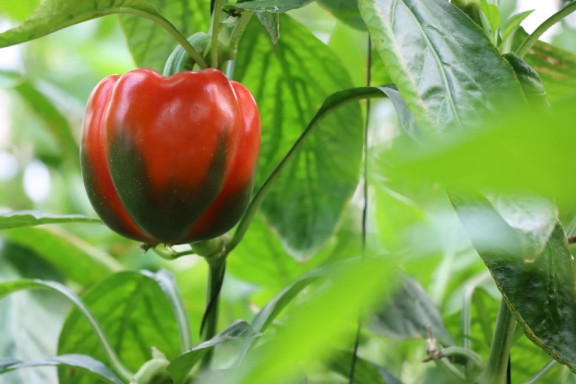
Look for sweet peppers that are brightly colored and slightly firm when lightly squeezed.
If the pepper is still green (and not fully ripened), you can wait until it turns red, orange, yellow, or purple. However, some farmers harvest bell peppers when they are still green.
However, firmness and color are important indicators of ripeness. Remove the fruit from the plant using a sharp knife or scissors.
Storing
Refrigerators work best for storing sweet peppers. They maintain a steady temperature. This is better than hanging peppers or putting them in a basket in your kitchen.
When storing sweet peppers in the fridge, dry them off beforehand. Too much moisture can cause them to spoil.
Also, consider placing them in a plastic bag with holes. This will keep air circulating and moisture out.
Other methods of preserving veggies include drying, canning, and pickling. However, if you plan on using your sweet peppers immediately, you do not need to store them in the fridge.
Types of Sweet Peppers
The most popular ones out there that you can cultivate at home include:
- Bell: These are the most versatile of all pepper types and come in a variety of colors (green, yellow, red, orange, and even purple!).
- Bananas: These peppers are mild-tasting and have a tangy, sweet flavor.
- Cubanelle: These are mild-flavored but can be slightly hot at times.
- Pimento: These are pretty sweet, with a hint of spiciness.
- Poblano: These green peppers have a bold flavor and mild heat, which adds an extra punch to any dish.
Whichever variety you grow at home, it should all thrive in similarly warm temperatures with plenty of sunshine.
Where to Buy Seeds
You can buy high-quality seeds from gardening stores, online, or farmers’ markets. Online retailers such as SeedsNow and Seed Needs sell good-quality organic seeds.
Takeaway
Sweet peppers can be a delicious and rewarding addition to any home garden. With the right know-how and some patient effort, you too can have a bumper crop of sweet peppers.




Add comment