

 Sasha Campbell
By choosing plants that positively interact with your leeks, you may reap bigger harvests, deter pests, and make better use of your space.
In this article, we will explore some of the best companions for leeks that you should consider adding to your garden. We will also highlight some plants to avoid planting nearby.
Good Companion Plants for Leeks
Leeks love the company of certain plants in the garden. Some of these plants include:
- Carrots: Leeks and carrots go well together in the garden. Leeks will repel carrot rust flies, while the carrots help loosen the soil for the leeks. Plus, it is said that carrots also help repel onion flies [1], benefiting leeks even more.
- Lettuce: You can also plant fast-growing lettuce seeds around young leek seedlings. By the time the leeks need space, the lettuce will have been harvested.
- Thyme, basil, and rosemary: These herbs help aerate the soil for leeks. They also help protect your leeks from certain insect pests.
- Chamomile: This fragrant herb may help improve the flavor of leeks. Chamomile may also attract pollinators to your garden bed.
- Beets: Leeks’ strong scent deters some pests that may feed on beets.
These pairings maximize garden space, boost pest control, and make leeks healthier and tastier.
Other good companions are celery, nasturtiums, French marigolds, and borage. Other great vegetables and fruits to include are strawberries, bok choy, tomatoes, Swiss chard, peppers, and turnips.
What Not to Plant with Leeks
Leeks don’t get along well with some plants. Avoid planting leeks near beans, peas, or other legumes, which can stunt their growth.
It is also recommended not to plant garlic in the same garden plot as leeks. Garlic can harbor onion maggots, which can affect leeks.
Asparagus also doesn’t do well when planted near alliums. It is believed that leeks inhibit asparagus growth.
Other bad companions for leeks include broccoli, cabbage, and cauliflower.
How to Grow Leeks
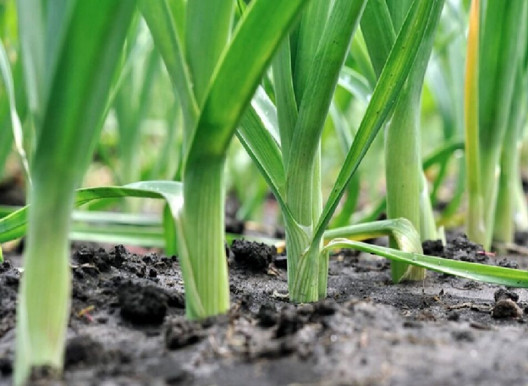
It’s easier to start with young leek seedlings than with seeds. Look for stocky seedlings that are about 8 inches tall. You want the seedlings to have a thick white base, showing they have been well-fed.
Plant the seedlings in early spring or fall. Also, space the seedlings about 6 inches apart in nutrient-rich soil with organic matter.
Bury the seedlings so just the top few inches of the green tops are sticking out of the soil. As the leeks grow, continue burying the stems with soil, mulch, or compost. This blanching process will keep the stems tender and white.
Additionally, keep the soil consistently moist as the leeks grow. Water the leeks at least an inch deep per week.
You must also fertilize the leeks every three to four weeks after the plants have established. However, the plants require additional nitrogen beyond the regular fertilizer applied at planting [2].
Garden Pests
Several common garden pests are attracted to leeks and other Alliums. Watch for these critters to keep your leek crop healthy and thriving:
- Onion maggots, thrips, and leaf miners are bothersome pests of leeks.
- Leek moth caterpillars also bore into leek leaves.
- Slugs and snails may also feed on leek seedlings and leaves.
Regularly inspect your leek patch for signs of damage or pests. Take prompt action using organic sprays, traps, baits, or row covers to protect your leek crop from these pests.
Plant Diseases
Leeks can be susceptible to a few diseases, so it’s good to be aware of them. The most common are downy mildew, botrytis leaf blight, rust, and white rot.
Therefore, be on the lookout for any signs of disease and remove infected leaves promptly. Also, by properly spacing your leek plants, watering at the base, and increasing airflow, you can avoid many diseases.
How to Harvest
To harvest your leeks, first check whether they are ready. The leek stalks should be at least 1 inch in diameter.
If they are ready, use a garden fork or trowel to loosen the soil around the base of the leek. Next, gently lift the plant out of the ground by grasping the leaves. Shake off the excess soil and trim the roots a bit.
Finally, store unwashed leeks in the refrigerator for up to 2 weeks. Place them in plastic and keep them in the crisper drawer.
Where to Buy Seeds
When buying leek seeds, many local garden centers and nurseries sell popular organic varieties.
You can also shop online with reputable seed companies, such as SeedsNow. This company offers many heirloom seeds. They also frequently run sales and promotions, and you can buy in bulk.
Takeaway
So now you’ve got the inside scoop on the best and worst leek companion plants. When you pair the right plants, they create a garden where each one supports the other.


Add comment